

SEO
How to Rank Tracking Software: A Practical Walkthrough
Learn how to use rank tracking software effectively, interpret data accurately, and avoid common misinterpretations to boost your SEO.
Understanding your website’s performance in search engine results is fundamental to any successful digital strategy. Rank tracking software provides the essential data needed to monitor keyword position Google, offering insights into where your pages appear for target search terms. This practical walkthrough will delve into the intricacies of rank tracking, explain its critical importance for SEO, and highlight common pitfalls in data interpretation. We will explore how to set up your tracking effectively, interpret the results accurately, and leverage tools like UtilitySEO to make informed decisions that drive organic growth.
What is Rank Tracking Software and Why it Matters
Rank tracking software is a digital tool designed to monitor and report on the search engine ranking positions of websites for specific keywords. For businesses and SEO professionals, this means being able to see exactly where their pages rank on Google, Bing, and other search engines. This data is crucial for assessing the effectiveness of SEO campaigns, identifying opportunities for improvement, and keeping a close eye on competitor performance. Without a reliable rank tracker, you are essentially navigating the SEO landscape blind, unable to quantify the impact of your efforts or react strategically to shifts in the live SERP data.
Knowing your website's position for key terms allows you to understand which content resonates with your audience and where optimisations are needed. It helps you identify pages that are performing well, as well as those that might be slipping. Effective rank tracking provides the foundation for data driven SEO, enabling you to refine your content strategy, technical SEO, and link building initiatives with confidence.
Common Misinterpretations of Rank Tracking Data
While rank tracking software provides invaluable data, it is crucial to interpret this information correctly to avoid making misguided strategic decisions. Many businesses fall into common traps when analysing their ranking reports.
Firstly, accuracy and margin of error are often misunderstood. No rank tracker can provide 100% real time, perfectly accurate data for every user in every location at every second. Search engine results are dynamic, personalised, and influenced by many factors including location, device, and search history. Tools typically gather data at specific intervals and locations. Expecting absolute precision can lead to frustration or incorrect conclusions. It is more productive to look at trends and significant shifts rather than obsessing over minor daily fluctuations.
Secondly, rank tracking can provide misleading signals if not viewed in context. A high ranking alone does not guarantee traffic or conversions. Factors like SERP features (featured snippets, knowledge panels) and AI Overviews can steal clicks even from top three positions. Conversely, a lower ranking might still drive substantial traffic if the keyword has very high volume or the SERP is less competitive. Always cross reference ranking data with actual traffic and conversion metrics from tools like Google Analytics 4.
Thirdly, understanding rank volatility is key to knowing when to react versus when to ignore fluctuations. Search engine algorithms are constantly updating, leading to natural daily or weekly shifts in rankings. Overreacting to every minor dip or rise can waste resources. Establish action thresholds: when does a ranking drop become significant enough to warrant investigation? Focus on sustained trends rather than transient movements.
Finally, the relationship between rank tracking frequency and actual SEO decision making value is often overlooked. Daily tracking might seem ideal, but for many businesses, weekly or even bi weekly tracking is sufficient for strategic planning. Overly frequent tracking can generate noise and lead to analysis paralysis. The value comes from consistent monitoring and trend analysis, not from observing every minute change. To audit whether your current rank tracker is providing accurate data, compare its reports against manual searches from different locations and devices, or cross reference with Google Search Console data for a broader picture.
Practical Application and UtilitySEO's Approach
Implementing rank tracking effectively requires a systematic approach. With UtilitySEO, you can streamline this process and gain deeper insights into your search performance. Our platform offers comprehensive features designed to help you monitor keyword position Google and understand your ranking fluctuations.
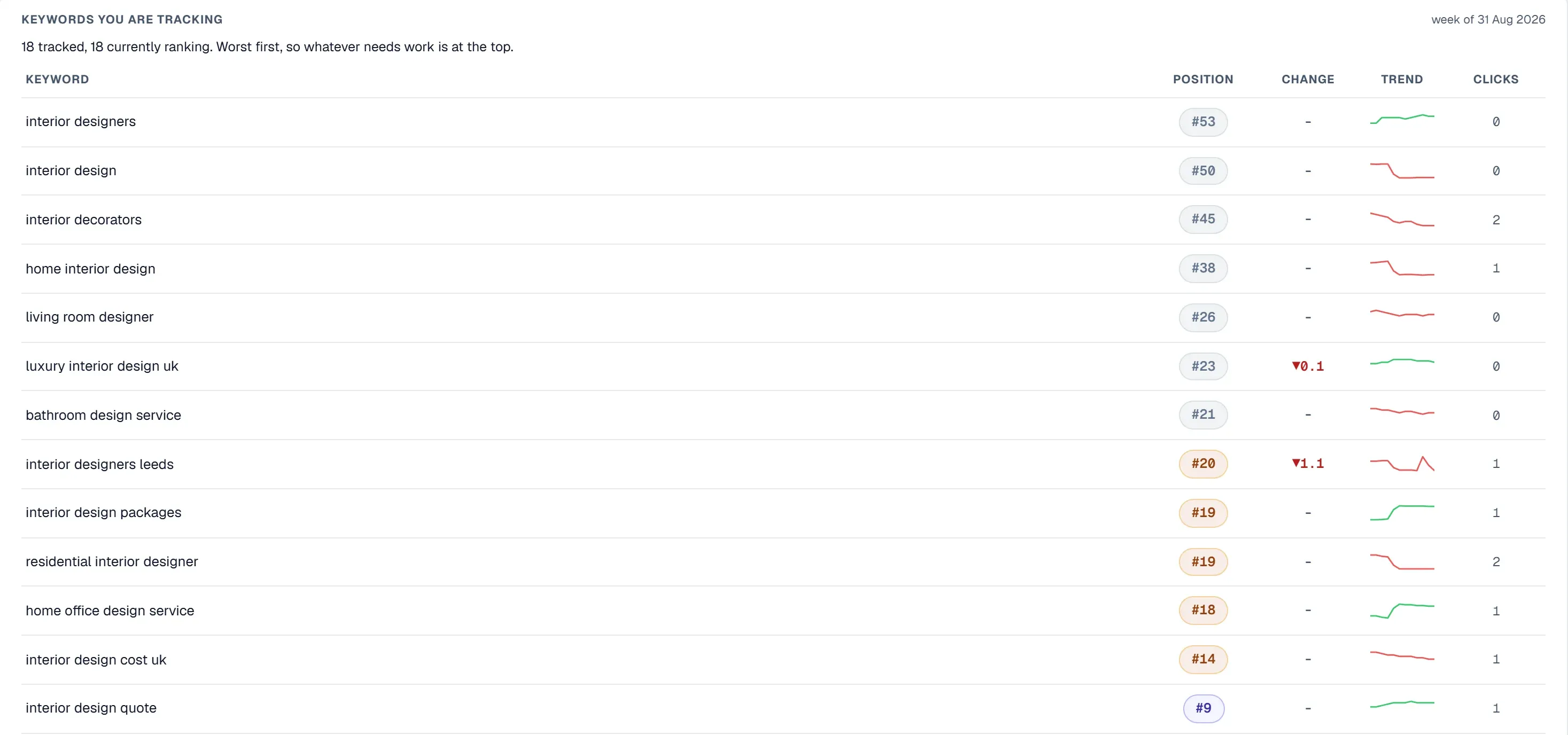
For instance, UtilitySEO’s Keyword tracking feature provides GSC powered rankings, impressions, and clicks, allowing you to group related keywords for easier management. This is vital for understanding performance across different content clusters or product categories. You can also leverage Keyword groups to organise your terms efficiently, renaming them or moving them between groups as your strategy evolves.
Understanding where your audience is searching from is paramount, especially for businesses with a local presence. UtilitySEO provides a Device and country breakdown for each keyword, showing you how your rankings differ across mobile and desktop, and in various geographical locations. This is invaluable for local rank tracking, helping you tailor your SEO efforts for specific markets or regions. For a broader view of your performance, the Trends tab displays search performance over time, from three days to two years, allowing you to observe long term shifts and seasonal patterns.
UtilitySEO also offers Monitoring and alerts functionality, enabling you to set up per project keyword position alerts. This means you will be notified immediately of significant ranking changes, allowing you to react promptly to drops or capitalise on improvements. Our Competitor tracking feature further enhances this by letting you add and monitor competitor domains, providing a vital comparison point for your own performance.
Setting Up for Success: Best Practices
Effective rank tracking goes beyond simply adding keywords to a tool. Technical setup best practices are essential for accurate data and actionable insights.
Firstly, keyword grouping strategies are paramount. Do not just dump all your keywords into one list. Group them logically by topic, product, service, or intent. This allows for more targeted analysis and helps you understand the performance of specific content clusters. For example, group "best running shoes" with "running shoe reviews" and "top athletic footwear" to see the overall performance of your running shoe content.
Secondly, implement a clear tag taxonomy. Use tags to categorise keywords further by factors like search volume, difficulty, content type, or stage in the customer journey. This provides an additional layer of data segmentation, enabling you to filter reports and identify specific areas of strength or weakness.
Finally, design your campaign architecture thoughtfully. If you have multiple websites, distinct services, or target different markets, set up separate projects within your rank tracking software. UtilitySEO’s Multi project support ensures that your data remains organised and relevant to each specific initiative. This structured approach ensures that your rank tracking efforts are not only comprehensive but also provide the clear, actionable insights needed to drive your SEO strategy forward.
Conclusion
Mastering rank tracking software is about more than just seeing numbers; it is about accurately interpreting those numbers to make informed SEO decisions. By understanding the nuances of data accuracy, avoiding common misinterpretations, and implementing sound setup practices, businesses can transform raw ranking data into a powerful tool for growth. UtilitySEO provides the robust features you need to monitor keyword position Google, track local rank tracking performance, and analyse live SERP data effectively. Ready to take control of your search visibility and make smarter SEO choices? Explore UtilitySEO’s Pricing plans today and unlock the full potential of your organic search strategy.
Frequently asked questions
Rank tracking software is a digital tool that monitors and reports on a website's search engine ranking positions for specific keywords.
- Monitors keyword positions across major search engines.
- Assesses the effectiveness of ongoing SEO campaigns.
- Identifies content that needs further optimization.
- Provides insights into competitor performance and strategy.
Utilizing rank tracking software is crucial for SEO success because it provides essential data to quantify efforts and make informed strategic decisions.
- Quantifies the impact of your SEO campaigns.
- Reveals which content resonates with your audience.
- Helps identify pages that are performing well or slipping.
- Informs data-driven content and technical SEO strategies.
The data from rank tracking software offers valuable insights but is not 100% real-time or perfectly precise due to dynamic search results.
- Search results are dynamic, personalized by location and device.
- Tools gather data at specific intervals and locations.
- Focus on trends and significant shifts, not minor daily fluctuations.
- Expect a margin of error due to constant algorithm updates.
A high ranking reported by rank tracking software does not automatically guarantee website traffic or conversions due to various SERP features.
- SERP features like snippets can steal clicks from top positions.
- AI Overviews may reduce clicks to organic listings.
- Cross-reference ranking data with actual traffic from Google Analytics.
- Consider keyword search volume and overall competition levels.
You should establish action thresholds for ranking changes reported by rank tracking software rather than overreacting to every minor fluctuation.
- Search algorithms are constantly updating, causing natural daily shifts.
- Minor daily dips or rises often don't require immediate action.
- Focus on significant drops or sustained upward trends.
- Overreacting can lead to wasted resources and misguided efforts.
Know what to fix next.
Scan your site for a clearer place to start.
About 30 seconds. No card needed.