

SEO
Best Rank Tracking Software: 10 Tools to Monitor Your SEO Rankings
The market for rank tracking software extends far beyond dedicated position monitoring. Leading platforms embed keyword ranking features within comprehensive...
Understanding how your website performs in search results is fundamental to knowing whether the work you are doing is paying off.
UtilitySEO
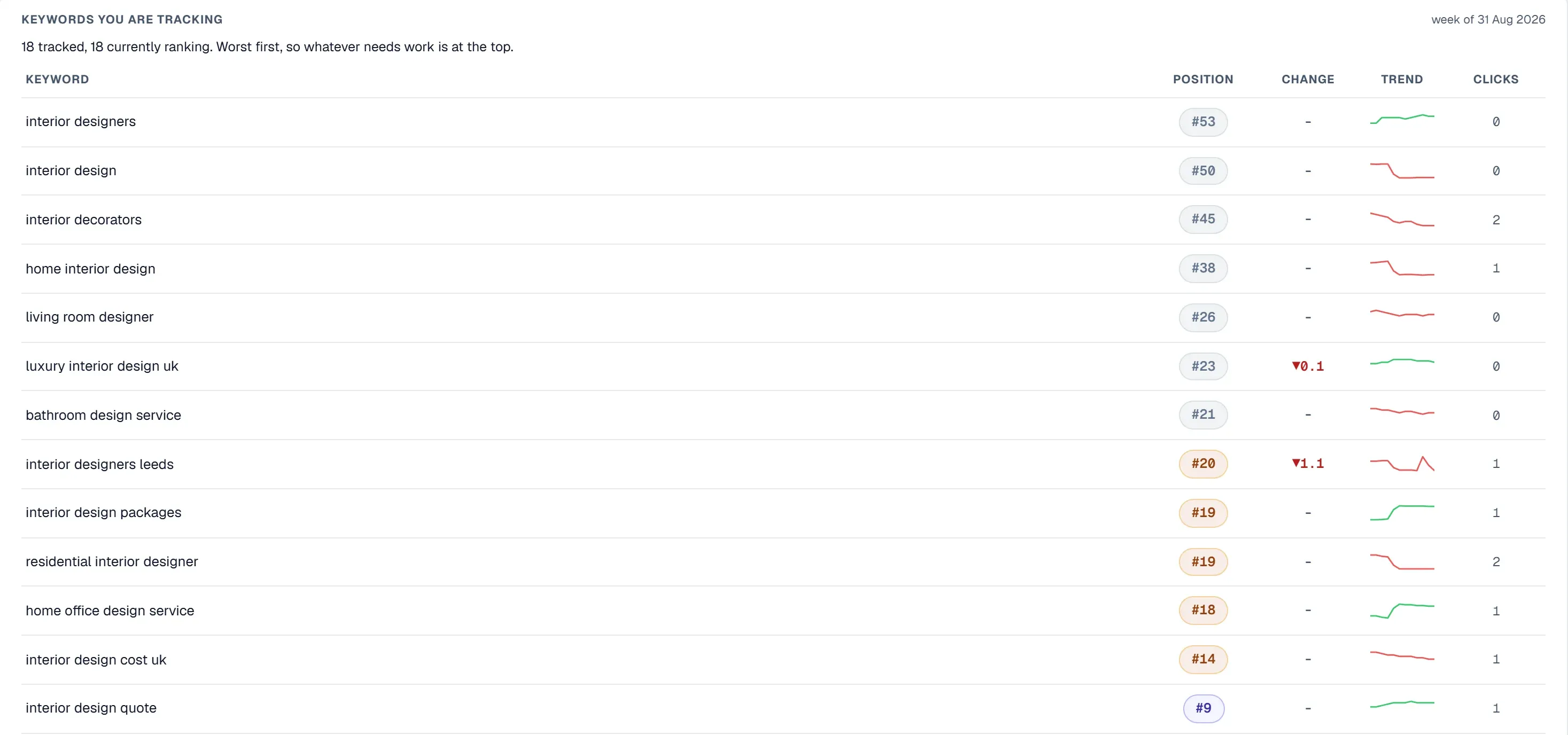
UtilitySEO empowers businesses to master their search engine visibility, providing unparalleled insights into their organic performance.
SEMrush
The interface demands significant onboarding investment, and whilst the tracking data appears comprehensive, extracting actionable insights requires navigating multiple modules. Pricing scales aggressively with feature expansion, making it challenging to isolate costs for rank monitoring specifically. Users report that the platform's strength lies in correlation analysis between ranking changes and technical factors, though this complexity can obscure straightforward diagnostic work needed for immediate optimisation priorities.
Ahrefs
The dashboard presentation tends towards breadth over actionability, displaying numerous data points without clear guidance on which metrics warrant immediate attention when ranking fluctuations occur. Historical data retention is solid, supporting trend analysis across extended periods. The platform's cost structure reflects its comprehensive feature set, though users often find themselves paying for capabilities they do not utilise for rank tracking purposes alone.
Moz
The interface prioritises simplicity, which can feel restrictive when investigating nuanced ranking behaviour across search intent variations or geographic markets. Keyword alert functionality exists but lacks sophistication compared to specialised tools. The platform's authority metrics (Domain Authority, Page Authority) complement rank data but add interpretive layers that may obscure direct cause-and-effect relationships between optimisation efforts and ranking movements.
Screaming Frog
Users must upload their own target keyword lists and execute rank checks manually or on defined schedules, making real-time monitoring impractical for large keyword portfolios. The output provides raw ranking position data without contextual interpretation or anomaly detection. Cost-effectiveness appeals to technical SEO practitioners comfortable with command line operations and data interpretation, yet the tool's architecture creates friction when immediate ranking diagnostic work is required. Integration with other platforms demands manual data export and manipulation.
Google Search Console
Google Search Console provides rank position data natively through the Performance Report, displaying average position metrics alongside click and impression counts. The interface emphasises owned property data exclusively, offering no competitive benchmarking or market context for interpreting whether ranking changes represent improvement or decline relative to competitor performance. Historical data retention is limited to recent months, constraining longitudinal analysis. Filtering capabilities lack granularity for isolating performance by specific parameters (device type, search intent variations, geographic regions) at scale. Whilst the data originates from Google itself and carries unquestionable authority, the lack of actionable diagnostic guidance means users must supplement this with external tools to move from observation to optimisation strategy.
Sitebulb
The rank checking integration depends on manual keyword list uploads and scheduled crawls, limiting responsiveness for monitoring volatile positions. The platform emphasises visual site structure analysis and technical health indicators that correlate with ranking performance, positioning rank data within a broader SEO health assessment rather than as an isolated metric. Pricing structures for the rank tracking component remain opaque relative to core crawl functionality.
Mangools
The platform's rank tracking emphasises keyword difficulty scoring and search volume correlation, presenting ranking changes alongside competitive keyword gaps. The user experience prioritises accessibility over analytical depth, which benefits newcomers but limits utility for practitioners requiring sophisticated segmentation or anomaly detection. Historical position data supports trend identification, though export functionality constrains integration with broader SEO workflows. Cost positioning as a budget alternative comes with commensurate limitations in tracking sophistication and market context.
SE Ranking
The interface emphasines white-label capabilities and agency-specific features, including client reporting templates and multi-account management. Rank checking frequency adjusts dynamically based on position volatility and keyword importance, theoretically optimising data collection efficiency. The platform's strength lies in integration between rank tracking and on-page optimisation recommendations, though the causal relationship between these suggestions and actual ranking movements remains anecdotal rather than empirically validated. Pricing flexibility appeals to agencies managing variable client portfolios.
Serpstat
The rank monitoring dashboard emphasises competitive position dynamics, displaying your rankings alongside competitor movements within shared keyword contexts. Historical data depth supports extended trend analysis and seasonal pattern identification. The platform's architecture creates interdependencies between modules, making it difficult to isolate rank tracking costs or functionality from the broader suite. Users report that actionable insights require navigating multiple data visualisations and manual filtering to identify which ranking changes necessitate immediate optimisation intervention.
Ubersuggest
The rank checking functionality provides basic position monitoring without advanced segmentation or contextual analysis. Keyword research and competitor benchmarking sit alongside rank data, though the integration between these modules relies on superficial correlation rather than diagnostic frameworks. The platform's low cost point reflects constrained historical data retention and limited export capabilities. Users frequently require supplementary tools for interpreting whether ranking changes correlate with specific technical or content interventions rather than broader algorithmic shifts.
Rank Math
The rank checking module connects directly to WordPress dashboards, permitting immediate monitoring of on-page changes against position movements. The platform's architecture constrains functionality to WordPress implementations, limiting applicability for multi-domain SEO programmes or non-WordPress technology stacks. Rank position data integrates with on-page optimisation recommendations generated by the plugin's analysis engine, though this creates circular validation risk wherein suggested changes appear correlated with improvements by design rather than empirical validation. Pricing structures favour single-site implementations rather than enterprise or agency use cases.
WooRank
The rank monitoring component functions alongside technical audit, content analysis, and competitive benchmarking within a unified dashboard. The interface prioritises visual presentation over analytical granularity, potentially obscuring nuanced ranking behaviour when multiple keywords within a domain experience divergent position movements. Historical tracking supports basic trend identification, though the platform lacks sophisticated seasonality analysis or anomaly detection. Pricing structures bundle rank tracking with broader audit capabilities, making isolated cost assessment difficult.
Seobility
The rank checker functions as a complementary module to site auditing, supporting keyword monitoring across limited portfolio sizes without enterprise scaling provisions. The platform's strength emerges in connecting rank data to specific technical health metrics, though this integration demands manual interpretation and correlation analysis. Historical position data supports month-over-month comparisons, yet export limitations constrain integration with external analytical workflows. Pricing positioning reflects modest feature scope relative to enterprise-grade alternatives.
Majestic
The platform's architectural focus on backlink intelligence creates friction when rank tracking serves as a primary use case. Historical data sufficient for trend analysis exists, though the emphasis on link intelligence rather than keyword position dynamics means rank tracking frequently feels ancillary to the platform's core value proposition. Pricing reflects the breadth of backlink analysis functionality rather than dedicated rank tracking capabilities.
Raven Tools
The rank monitoring module integrates with technical audit and content analysis modules, though these connections remain largely presentational rather than analytically rigorous. The platform emphasises ease of client reporting, permitting agencies to communicate ranking changes without requiring interpretation frameworks. Historical data supports extended trend analysis, though the platform lacks sophistication in isolating which factors correlate with ranking movements versus which remain coincidental. Pricing targets agencies managing multiple client accounts rather than individual practitioners or in-house teams.
Further reading
Frequently asked questions
Rank tracking software monitors your website's search engine positions for target keywords over time.
- Tracks daily or weekly keyword ranking changes across search engines
- Identifies optimization wins and lost rankings quickly
- Benchmarks your positions against competitor rankings
- Alerts you to significant ranking fluctuations requiring action
Google Search Console provides ranking data but lacks dedicated rank tracking software features for comprehensive monitoring.
- GSC shows average position but lacks position history beyond 90 days
- No competitor rank comparison or keyword tracking across multiple domains
- Limited alert automation for significant ranking drops
- Rank tracking software provides dedicated dashboards and trend visualization
Both platforms embed rank tracking in comprehensive suites with different strengths and cost implications.
- SEMrush excels at correlating ranking changes with technical factors
- Ahrefs emphasizes keyword difficulty metrics and competitive benchmarking
- SEMrush has higher pricing but stronger diagnostic capabilities
- Ahrefs offers solid historical data but broader, less focused dashboards
Update frequency varies by platform tier, typically ranging from daily to weekly monitoring cycles.
- Enterprise plans often offer daily or real-time rank tracking updates
- Standard plans usually provide weekly position checks
- Manual rank checks available on most platforms for immediate diagnostics
- Screaming Frog requires manual upload and scheduling for rank verification
Essential rank tracking software features directly impact your ability to diagnose ranking issues and track progress.
- Real-time or always-current position updates prevent missed ranking drops
- Historical data retention supports trend analysis across months or years
- Automated alerts notify you of significant changes immediately
- Competitor tracking shows relative performance shifts in your market
Moz provides straightforward rank tracking but recent pricing changes reduced value compared to dedicated alternatives.
- Simpler interface appeals to beginners but feels restrictive for advanced analysis
- Domain Authority metrics add interpretation layers that obscure direct cause-and-effect
- Keyword alerts lack sophistication versus specialized rank tracking tools
- Fragmented modules make isolating rank tracking costs difficult
Know what to fix next.
Scan your site for a clearer place to start.
About 30 seconds. No card needed.