

SEO
Generative Engine Optimization: Principles and Practical Strategies
Understand generative engine optimization, its core principles, and practical strategies for optimising content for AI powered search results.
The digital landscape is rapidly evolving, with artificial intelligence increasingly influencing how users find information. Generative Engine Optimization, or GEO, represents a crucial shift in SEO, moving beyond traditional search engine rankings to focus on how content performs within AI powered search results. This post will define generative engine optimization, explore its core principles, provide practical strategies for implementation, and demonstrate how UtilitySEO can support your efforts in this new era of digital visibility. Understanding and adapting to GEO is vital for maintaining a competitive edge and ensuring your content reaches its target audience effectively.
Understanding Generative Engine Optimization
Generative Engine Optimization is the practice of optimising digital content to be effectively understood and utilised by large language models (LLMs) and AI powered search engines. Unlike traditional SEO, which primarily targets algorithms to rank web pages in a list, GEO aims to ensure your content is chosen and synthesised by AI systems to formulate direct llm answers, featured snippets, and comprehensive ai overviews. It is about becoming the authoritative source an AI trusts when generating a response for a user query. This paradigm shift means focusing on clarity, accuracy, and structured information that LLMs can easily process and present. Effective llm seo strategies are now paramount for visibility.
Key Principles for Effective Generative Engine Optimization
To excel in generative engine optimization, content creators must adhere to several core principles that resonate with AI systems. Firstly, clarity and conciseness are paramount. LLMs favour content that provides direct, unambiguous answers to questions. Avoid jargon and overly complex sentences. Secondly, factual accuracy and authority are critical. AI models are designed to identify reliable sources, making E E A T (Experience, Expertise, Authoritativeness, Trustworthiness) more important than ever. Ensure your content is well researched, cited where appropriate, and authored by credible individuals or organisations. Thirdly, structured data and clear formatting significantly aid AI in understanding your content. Utilise headings, subheadings, bullet points, and schema markup to break down information into digestible chunks. This makes it easier for AI to extract key information and present it as part of its ai overviews or direct llm answers. For a deeper dive into this area, consider reading our guide on Mastering Answer Engine Optimization in 2026.
Practical Strategies for Implementing GEO
Implementing a robust generative engine optimization strategy involves several practical steps. Begin by creating high quality, answer focused content. Anticipate user questions and provide comprehensive yet direct answers within your content. Think about how an AI might summarise your page for a user. Incorporate structured data markup (Schema.org) to explicitly label key information like FAQs, how to guides, and product details. This helps AI systems categorise and understand your content more effectively. Focus on building topical authority by producing a cluster of interconnected content around specific themes. This signals to AI that your site is a comprehensive and reliable source for a given subject. Regularly audit your existing content to ensure it is up to date, accurate, and formatted for AI readability. Content should be easy for both humans and machines to parse. Furthermore, consider optimising for specific query types that are likely to trigger AI responses, such as comparison queries or definitional questions.
UtilitySEO and Your Generative Engine Optimization Strategy
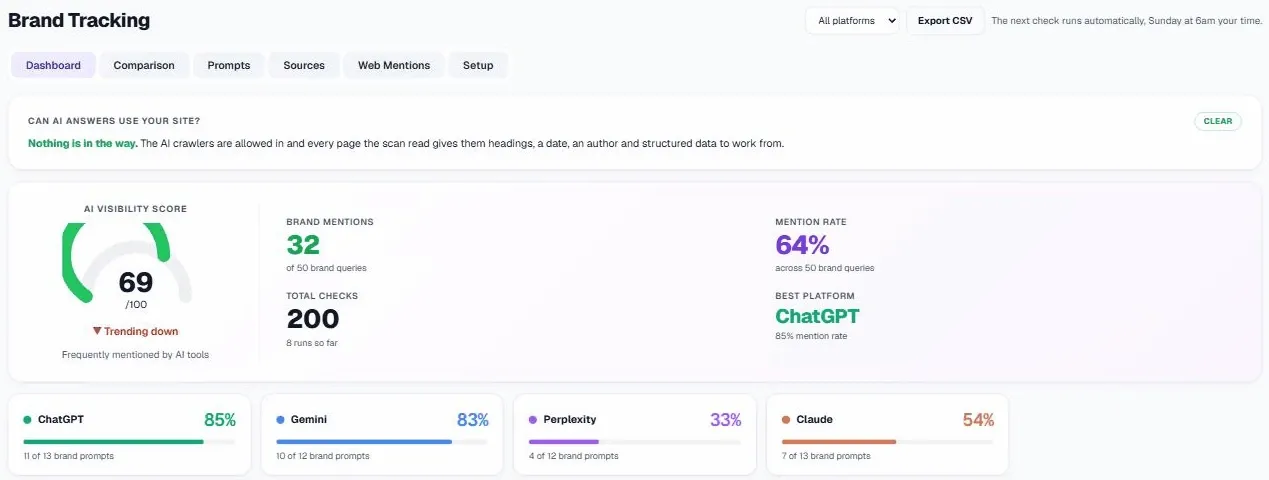
Adapting to the demands of generative engine optimization requires sophisticated tools, and UtilitySEO offers a suite of features designed to support your efforts. Our Brand tracking functionality is invaluable for monitoring your brand's visibility within AI generated responses from platforms like ChatGPT, Gemini, and Perplexity. You can use Neutral category prompts to see if your brand appears organically in AI responses, or Ranked list prompts to extract its position in "top tools" style answers. This gives you a clear picture of your brand's share of voice in the AI landscape.
Beyond brand monitoring, UtilitySEO provides tools to enhance your content for AI consumption. Our AI Insights feature offers automated SEO recommendations, helping you identify opportunities to make your content more AI friendly. The AI Content Quality Scoring tool scores pages against SEO best practices, giving you an indication of how well your content might perform in an AI driven environment. For optimising your on page elements, the Meta Generator creates AI suggested title tags and meta descriptions with SERP previews, while the Alt text generator provides AI generated alt text for images, improving accessibility and content understanding for AI. These features collectively empower you to refine your content and strategy for the evolving world of ai search optimization.
Conclusion
Generative engine optimization is not merely a trend; it is a fundamental evolution in how we approach SEO. By understanding the principles of clarity, authority, and structured content, and by leveraging advanced tools, businesses can ensure their content remains visible and influential in an AI driven search environment. Embracing GEO is about future proofing your digital strategy and connecting with users through the next generation of search. UtilitySEO provides the comprehensive tools and insights you need to navigate this new landscape successfully. Explore our Pricing plans today and begin optimising for the future of search.
Frequently asked questions
Generative Engine Optimization is the process of tailoring digital content so that large language models and AI-powered search engines can effectively understand and utilize it.
- Aims to get content chosen for AI-generated direct answers and snippets.
- Focuses on content being the authoritative source an AI trusts.
- Prioritizes clarity, factual accuracy, and structured data for LLMs.
Generative Engine Optimization shifts focus from traditional web page rankings to optimizing content for AI systems that synthesize information for direct answers and overviews.
- Traditional SEO targets algorithms for ranked web page lists.
- GEO aims for content selection and synthesis by AI systems.
- Focuses on becoming an AI's trusted information source.
Effective Generative Engine Optimization relies on clarity, factual accuracy, and structured data to ensure AI systems can easily process and present content to users.
- Clarity and conciseness provide direct, unambiguous answers.
- Factual accuracy and authority build AI trust (E-E-A-T).
- Structured data and clear formatting aid AI understanding.
Implementing Generative Engine Optimization involves creating high-quality, answer-focused content and utilizing structured data markup to help AI systems categorize and understand your information effectively.
- Create content that directly answers anticipated user questions.
- Incorporate structured data (Schema.org) for FAQs and guides.
- Build topical authority through interconnected content clusters.
Know what to fix next.
Scan your site for a clearer place to start.
About 30 seconds. No card needed.