
Generative Engine Optimization: Grundlagen und praktische Strategien
Was Generative Engine Optimization ist, welche Grundprinzipien gelten und wie Sie Inhalte für KI-gestützte Suchergebnisse optimieren.
Die digitale Landschaft verändert sich rasant, und künstliche Intelligenz beeinflusst zunehmend, wie Nutzer Informationen finden. Generative Engine Optimization, kurz GEO, ist ein entscheidender Wandel im SEO: Es geht nicht mehr nur um klassische Suchmaschinen-Rankings, sondern darum, wie Inhalte in KI-gestützten Suchergebnissen abschneiden. Dieser Beitrag definiert Generative Engine Optimization, erläutert die Grundprinzipien, zeigt praktische Strategien für die Umsetzung und erklärt, wie UtilitySEO Sie in dieser neuen Ära der digitalen Sichtbarkeit unterstützt. Wer GEO versteht und sich darauf einstellt, bleibt wettbewerbsfähig und erreicht seine Zielgruppe weiterhin wirksam.
Generative Engine Optimization verstehen
Generative Engine Optimization ist die Praxis, digitale Inhalte so zu optimieren, dass Large Language Models (LLMs) und KI-gestützte Suchmaschinen sie gut verstehen und nutzen können. Klassisches SEO zielt vor allem darauf ab, Webseiten per Algorithmus in einer Liste zu ranken. GEO dagegen soll dafür sorgen, dass KI-Systeme Ihre Inhalte auswählen und zusammenführen, um direkte LLM-Antworten, Featured Snippets und umfassende KI-Übersichten zu formulieren. Es geht darum, die maßgebliche Quelle zu werden, der eine KI bei der Antwort auf eine Nutzeranfrage vertraut. Dieser Paradigmenwechsel bedeutet: Klarheit, Genauigkeit und strukturierte Informationen stehen im Vordergrund, die LLMs leicht verarbeiten und wiedergeben können. Wirksame LLM-SEO-Strategien sind heute entscheidend für Sichtbarkeit.
Wichtige Prinzipien für wirksame Generative Engine Optimization
Wer bei Generative Engine Optimization erfolgreich sein will, muss einige Grundprinzipien beachten, die bei KI-Systemen ankommen. Erstens sind Klarheit und Prägnanz entscheidend. LLMs bevorzugen Inhalte, die direkte, eindeutige Antworten auf Fragen liefern. Vermeiden Sie Fachjargon und überladene Sätze. Zweitens sind sachliche Richtigkeit und Autorität zentral. KI-Modelle sind darauf ausgelegt, verlässliche Quellen zu erkennen, sodass E-E-A-T (Experience, Expertise, Authoritativeness, Trustworthiness) wichtiger ist denn je. Sorgen Sie dafür, dass Ihre Inhalte gut recherchiert sind, wo sinnvoll Quellen nennen und von glaubwürdigen Personen oder Organisationen stammen. Drittens helfen strukturierte Daten und eine klare Formatierung der KI erheblich, Ihre Inhalte zu verstehen. Nutzen Sie Überschriften, Zwischenüberschriften, Aufzählungen und Schema-Markup, um Informationen in leicht verdauliche Abschnitte zu gliedern. So kann die KI wichtige Informationen leichter entnehmen und in ihren KI-Übersichten oder direkten LLM-Antworten darstellen. Wenn Sie tiefer einsteigen möchten, lesen Sie unseren Leitfaden Mastering Answer Engine Optimization in 2026.
Praktische Strategien für die Umsetzung von GEO
Eine solide Strategie für Generative Engine Optimization besteht aus mehreren praktischen Schritten. Beginnen Sie mit hochwertigen, antwortorientierten Inhalten. Nehmen Sie Fragen der Nutzer vorweg und geben Sie in Ihren Inhalten umfassende, aber direkte Antworten. Überlegen Sie, wie eine KI Ihre Seite für einen Nutzer zusammenfassen würde. Setzen Sie strukturierte Daten (Schema.org) ein, um wichtige Informationen wie FAQs, Anleitungen und Produktdetails ausdrücklich auszuzeichnen. Das hilft KI-Systemen, Ihre Inhalte besser einzuordnen und zu verstehen. Bauen Sie thematische Autorität auf, indem Sie ein Cluster miteinander verknüpfter Inhalte rund um bestimmte Themen erstellen. Das signalisiert der KI, dass Ihre Website eine umfassende und verlässliche Quelle zu einem Thema ist. Prüfen Sie Ihre bestehenden Inhalte regelmäßig darauf, ob sie aktuell, korrekt und für die KI-Lesbarkeit formatiert sind. Inhalte sollten für Menschen und Maschinen gleichermaßen leicht zu erfassen sein. Außerdem lohnt es sich, gezielt für Anfragetypen zu optimieren, die wahrscheinlich KI-Antworten auslösen, etwa Vergleichsanfragen oder Definitionsfragen.
UtilitySEO und Ihre Strategie für Generative Engine Optimization
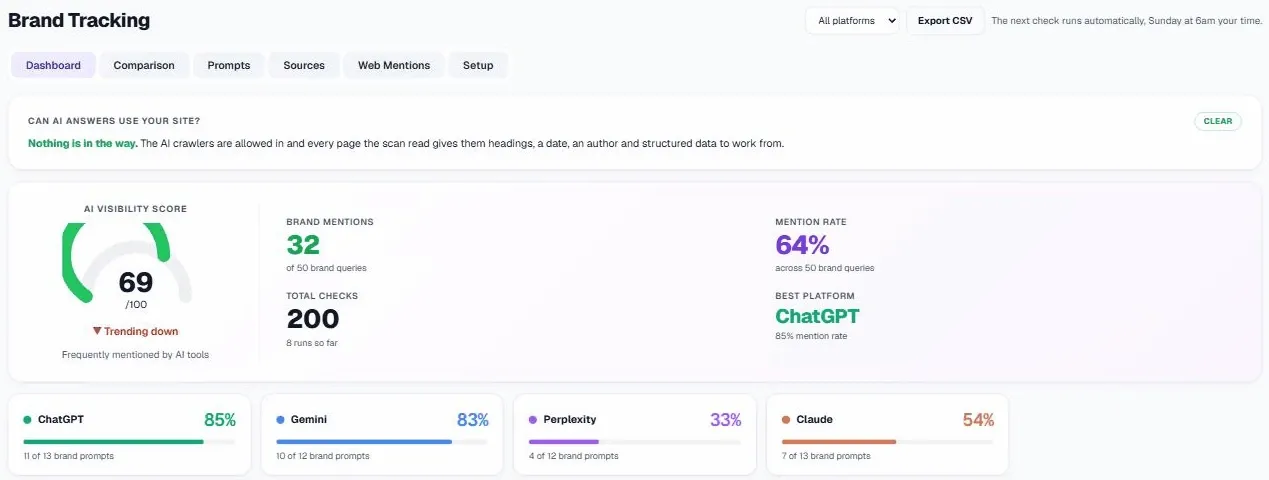
Generative Engine Optimization erfordert leistungsfähige Werkzeuge, und UtilitySEO bietet eine Reihe von Funktionen, die Sie dabei unterstützen. Unsere Brand-Tracking-Funktion ist unverzichtbar, um die Sichtbarkeit Ihrer Marke in KI-generierten Antworten von Plattformen wie ChatGPT, Gemini und Perplexity zu überwachen. Mit neutralen Kategorie-Prompts sehen Sie, ob Ihre Marke in KI-Antworten organisch auftaucht, und mit Ranglisten-Prompts ermitteln Sie ihre Position in Antworten im Stil von „Top-Tools“. So erhalten Sie ein klares Bild vom Share of Voice Ihrer Marke in der KI-Landschaft.
Neben dem Markenmonitoring bietet UtilitySEO Werkzeuge, mit denen Sie Ihre Inhalte für die KI-Nutzung verbessern. Unsere Funktion KI-Insights liefert automatisierte SEO-Empfehlungen und hilft Ihnen, Chancen zu erkennen, Ihre Inhalte KI-freundlicher zu gestalten. Das Werkzeug AI Content Quality Scoring bewertet Seiten anhand von SEO-Best-Practices und gibt einen Hinweis darauf, wie gut Ihre Inhalte in einem KI-getriebenen Umfeld abschneiden könnten. Für die Optimierung Ihrer Onpage-Elemente erstellt der Meta Generator KI-gestützte Title-Tags und Meta-Descriptions mit SERP-Vorschau, während der Alt-Text-Generator KI-generierte Alt-Texte für Bilder liefert, die Barrierefreiheit und Inhaltsverständnis für die KI verbessern. Zusammen helfen Ihnen diese Funktionen, Ihre Inhalte und Ihre Strategie für die sich entwickelnde Welt der KI-Suchoptimierung zu verfeinern.
Fazit
Generative Engine Optimization ist nicht bloß ein Trend, sondern eine grundlegende Weiterentwicklung im Umgang mit SEO. Wer die Prinzipien Klarheit, Autorität und strukturierte Inhalte versteht und fortschrittliche Werkzeuge nutzt, sorgt dafür, dass seine Inhalte in einer KI-getriebenen Suchumgebung sichtbar und einflussreich bleiben. GEO zu übernehmen heißt, Ihre digitale Strategie zukunftssicher zu machen und Nutzer über die nächste Generation der Suche zu erreichen. UtilitySEO liefert die umfassenden Werkzeuge und Erkenntnisse, die Sie brauchen, um sich in dieser neuen Landschaft erfolgreich zu bewegen. Sehen Sie sich noch heute unsere Preise an und beginnen Sie, für die Zukunft der Suche zu optimieren.
Frequently asked questions
Was ist Generative Engine Optimization?
Generative Engine Optimization bedeutet, digitale Inhalte so aufzubereiten, dass Large Language Models und KI-gestützte Suchmaschinen sie gut verstehen und nutzen können.
- Ziel: Inhalte für KI-generierte Direktantworten und Snippets auswählen lassen.
- Fokus: die maßgebliche Quelle sein, der eine KI vertraut.
- Priorität: Klarheit, sachliche Richtigkeit und strukturierte Daten für LLMs.
Wie unterscheidet sich Generative Engine Optimization von klassischem SEO?
Generative Engine Optimization verlagert den Fokus von klassischen Webseiten-Rankings auf die Optimierung von Inhalten für KI-Systeme, die Informationen zu direkten Antworten und Übersichten zusammenführen.
- Klassisches SEO zielt mit Algorithmen auf Ranglisten von Webseiten.
- GEO zielt auf Auswahl und Zusammenführung von Inhalten durch KI-Systeme.
- Fokus: zur vertrauenswürdigen Informationsquelle einer KI werden.
Was sind die wichtigsten Prinzipien für wirksame Generative Engine Optimization?
Wirksame Generative Engine Optimization setzt auf Klarheit, sachliche Richtigkeit und strukturierte Daten, damit KI-Systeme Inhalte leicht verarbeiten und Nutzern präsentieren können.
- Klarheit und Prägnanz liefern direkte, eindeutige Antworten.
- Sachliche Richtigkeit und Autorität schaffen Vertrauen bei der KI (E-E-A-T).
- Strukturierte Daten und klare Formatierung erleichtern das Verständnis der KI.
Wie kann ich Strategien für Generative Engine Optimization umsetzen?
Zur Umsetzung gehören hochwertige, antwortorientierte Inhalte und strukturierte Daten, damit KI-Systeme Ihre Informationen richtig einordnen und verstehen.
- Erstellen Sie Inhalte, die erwartete Nutzerfragen direkt beantworten.
- Setzen Sie strukturierte Daten (Schema.org) für FAQs und Anleitungen ein.
- Bauen Sie thematische Autorität über verknüpfte Inhaltscluster auf.
Keep reading
See how your site actually scores
Free 30-second scan, real Google scores and a ranked fix list. No signup needed.
No credit card · Cancel anytime