

SEO
Competitor SEO Analysis: Complete Guide
A complete guide to competitor SEO analysis covering technical audits, keyword monitoring, and actionable strategies to outrank your rivals.
Understanding what your competitors are doing online is no longer optional. A thorough competitor SEO analysis reveals the strategies driving traffic to rival websites, helping you identify gaps in your own approach and uncover opportunities for growth. Whether you are a small business owner or a seasoned marketer, knowing how to evaluate competitor performance can transform your search visibility. This guide covers everything from initial audits to ongoing monitoring, giving you practical steps to outrank the competition. We will also explore how modern tools can streamline this process and deliver actionable insights.
What Is Competitor SEO Analysis and Why Does It Matter?
Competitor SEO analysis involves examining the search engine optimisation strategies of businesses competing for the same audience. This includes studying their keyword targeting, backlink profiles, content strategies, and technical site health.
The insights gained from this process help you understand what works in your industry. Rather than guessing which keywords to target or content formats to create, you can learn from proven successes and avoid costly mistakes.
Key benefits include:
- Identifying high value keywords your competitors rank for
- Discovering content gaps you can fill
- Understanding backlink opportunities
- Benchmarking your technical performance against industry standards
- Tracking changes in competitor visibility over time
Without this analysis, you are essentially operating blind while competitors refine their strategies based on data.
How to Conduct a Competitor SEO Analysis Step by Step
Identify Your True Competitors
Start by listing businesses that rank for your target keywords. These may differ from your traditional business competitors. Use search engines to discover who appears in top positions for terms relevant to your offerings.
Consider both direct competitors selling similar products and indirect competitors creating content that captures your target audience.
Perform a Technical SEO Audit
Before diving into content and keywords, assess the technical foundation of competitor websites. A technical SEO audit reveals how well a site performs in terms of speed, mobile usability, crawlability, and structured data implementation.
Look for patterns across top ranking competitors. Do they use specific schema markup? How quickly do their pages load? Are there common technical practices among successful sites in your niche?
Running your own site through a similar audit helps identify where you fall short. A comprehensive wordpress seo audit is particularly valuable if you use this popular platform, as plugin conflicts and theme issues often create hidden problems.
Analyse Keyword Strategies
Examine which keywords drive traffic to competitor sites. Focus on:
- Primary keywords they target on main pages
- Long tail variations in blog content
- Keywords where they rank but you do not
- Search intent behind their top performing terms
Effective Google keyword tracking goes beyond a single snapshot. Track how competitor rankings change over time to understand which strategies deliver lasting results versus temporary gains.
Evaluate Content Quality and Structure
Study the content that performs well for competitors. Consider:
- Average word count of top ranking pages
- Content formats used (guides, lists, videos, tools)
- Update frequency and freshness signals
- Internal linking patterns
- Use of multimedia and visual elements
This analysis reveals the content standard required to compete effectively in your market.
Assess Backlink Profiles
Backlinks remain a crucial ranking factor. Analyse where competitors earn links from and identify potential opportunities for your own outreach efforts.
Look for patterns in the types of sites linking to competitors. Industry publications, resource pages, and guest posting opportunities often emerge from this research.
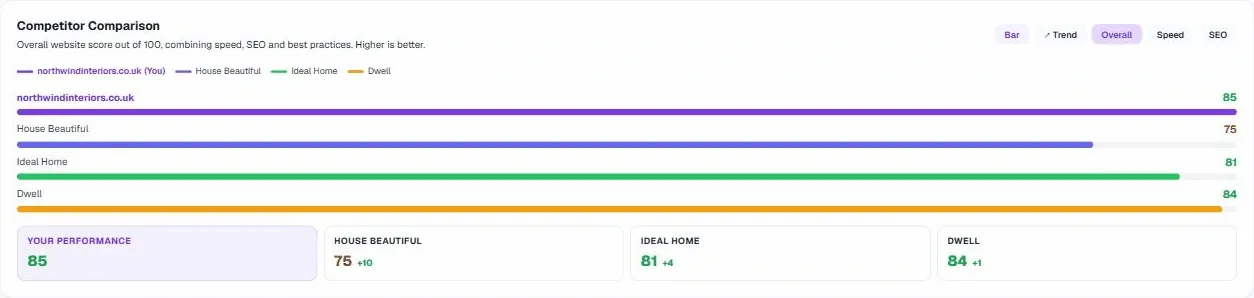 An overall website score, combining speed, SEO and best practices, compared with each tracked competitor.
Using Free Tools to Start Your Analysis
You do not need expensive software to begin competitor analysis. A free seo audit using available tools provides valuable baseline data.
Google Search Console offers insights into your own performance, while manual searches reveal competitor positioning. Browser extensions can quickly surface basic metrics for any page you visit.
However, free tools have limitations. They often provide incomplete data, lack historical tracking, and require manual effort to compile findings. As your analysis matures, dedicated platforms become essential for efficiency and depth.
How UtilitySEO Supports Competitor Analysis
Modern SEO platforms simplify competitor tracking and analysis. UtilitySEO includes several features designed specifically for competitive intelligence.
The Competitor Tracking functionality lets you add and monitor competitor domains directly within the platform. Rather than manually checking rival sites, you can observe changes through the Competitor Visibility Chart, which provides score comparisons at a glance.
For deeper analysis, the Site Audit tool runs a technical SEO audit with issue categorisation. This helps you understand not just your own site health but establish benchmarks against which to measure competitors.
The Backlinks and Crawl feature analyses link profiles and site structure, revealing opportunities you might otherwise miss. Combined with SEO Keyword Monitoring through GSC powered rankings, you gain a complete picture of competitive positioning.
Brand Tracking takes analysis further by monitoring visibility across AI platforms like ChatGPT, Gemini, and Perplexity. The share of voice donut chart shows how your brand compares against competitors, while the multi line trend chart tracks changes over time. This forward looking capability prepares you for the evolving search landscape.
The platform also offers AI powered competitor and keyword suggestions from URL analysis, plus bulk CSV import for managing multiple competitors and keywords efficiently.
Turning Analysis Into Action
Data without action delivers no value. Transform your competitor seo analysis into concrete improvements:
Prioritise quick wins. Target keywords where competitors rank on page two or three. These positions suggest the topic is competitive but not dominated.
Fill content gaps. Create resources covering topics competitors have missed or addressed poorly.
Improve technical performance. If competitors load faster or offer better mobile experiences, address these issues promptly. Core Web Vitals can significantly impact your competitive positioning.
Build strategic backlinks. Pursue link opportunities identified through competitor profile analysis.
Monitor and adapt. SEO is ongoing. Regular tracking ensures you spot competitor moves and respond appropriately.
Conclusion
Effective competitor SEO analysis separates successful websites from those struggling for visibility. By understanding rival strategies, identifying opportunities, and systematically improving your own site, you position yourself for sustainable search success.
Tools that combine technical audits, keyword tracking, and competitor monitoring streamline this process considerably. UtilitySEO brings these capabilities together in one platform, from the Site Audit feature for technical analysis to Competitor Tracking for ongoing visibility comparison. The Brand Tracking functionality even extends analysis to AI search platforms, ensuring you stay ahead as search evolves.
Start your competitor analysis today and discover the insights waiting to transform your SEO performance.
Frequently asked questions
Competitor SEO analysis involves evaluating the search engine optimization strategies of businesses vying for the same online audience.
- It examines keyword targeting, backlink profiles, and content strategies.
- This process helps uncover what works in your industry.
- It identifies opportunities for improvement in your own SEO efforts.
- Avoid costly mistakes by learning from successful rivals.
Competitor SEO analysis is crucial because it provides actionable insights into successful strategies, improving your search visibility and helping outrank rivals.
- Identifies high-value keywords your competitors rank for.
- Uncovers content gaps you can effectively fill.
- Reveals valuable backlink opportunities for your site.
- Benchmarks your technical performance against industry standards.
To begin a competitor SEO analysis, first identify your true online competitors by listing businesses that rank for your target keywords.
- Use search engines to find top-ranking sites for your relevant terms.
- Include both direct and indirect competitors in your assessment.
- Understand who is capturing your target audience's attention.
- This initial step ensures you analyze the right rivals.
A technical SEO audit for competitor SEO analysis assesses rivals' website performance regarding speed, mobile usability, and crawlability.
- It reveals technical foundations of top-ranking competitor websites.
- Helps identify common successful technical practices in your niche.
- Pinpoints where your own site might technically fall short.
- Ensures your site's foundation is as strong as your competitors'.
Know what to fix next.
Scan your site for a clearer place to start.
About 30 seconds. No card needed.