

SEO
GSC Cluster Analysis on Large Publisher Sites
Perform GSC cluster analysis to improve your search engine rankings and reduce duplication.
Understanding GSC Cluster Analysis
GSC cluster analysis involves grouping keywords and pages based on their similarity and relevance. This is done by analysing the keywords and pages that are routed to each other in Google Search Console. By doing so, publishers can identify clusters of keywords that are related to each other and can be targeted with a single page. This technique is particularly useful for large publisher sites, as it helps them to reduce keyword cannibalisation and page overlap. For instance, keyword grouping can help publishers to identify which pages are competing for the same query and merge them into a single, more authoritative page.
Benefits of GSC Cluster Analysis
The benefits of GSC cluster analysis are numerous. It helps publishers to identify areas where they can improve their content and reduce duplication. By merging cannibalised posts, publishers can reduce the number of pages competing for the same query and increase their chances of ranking higher in search engine results. Additionally, GSC cluster analysis enables publishers to identify opportunities for internal linking and page overlap detection. This can help to improve the user experience and increase engagement on their site. Same page multiple keywords can also be identified and optimised, leading to improved rankings and increased traffic.
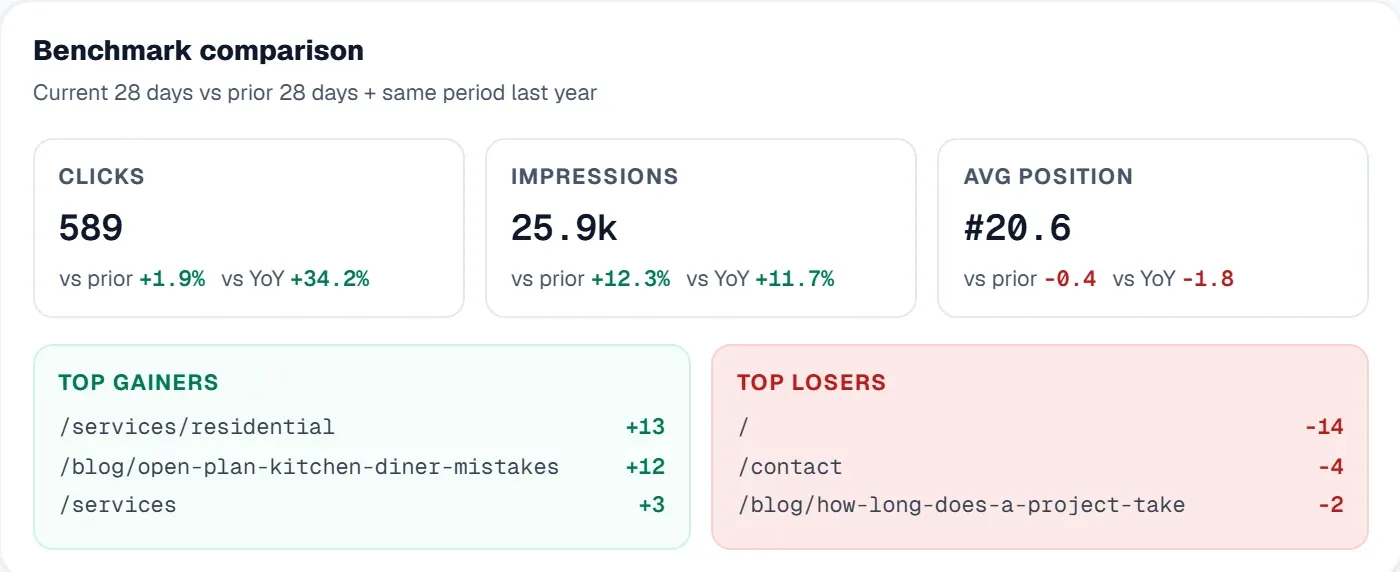 The UtilitySEO dashboard puts Search Console clicks, impressions, average position and click-through rate in one view, with the pages gaining and losing most.
Real-World Examples and UtilitySEO
GSC cluster analysis can be performed using various tools, including UtilitySEO. The platform provides a range of features that can help publishers to perform GSC cluster analysis, including keyword clusters and cannibalisation detection. UtilitySEO's keyword cluster feature groups topics by which page Google routes each query to, enabling publishers to identify areas where they can improve their content. The platform also provides a cannibalisation detection feature, which identifies pages competing for the same query. By using these features, publishers can gain valuable insights into their content and make data-driven decisions to enhance their online presence. For example, publishers can use UtilitySEO's keyword tracking feature to monitor their rankings and identify areas where they can improve.
Conclusion and Next Steps
In conclusion, GSC cluster analysis is a powerful technique that can help large publisher sites to improve their search engine rankings and reduce duplication. By using tools like UtilitySEO, publishers can gain valuable insights into their content and make data-driven decisions to enhance their online presence. To learn more about how UtilitySEO can help with GSC cluster analysis, visit our Pricing page or check out our Workflow to see how our platform can help you to improve your online presence.
Frequently asked questions
Gsc cluster analysis helps improve search rankings.
- Reduces duplication
- Identifies keyword cannibalisation
- Enhances online presence
Gsc cluster analysis involves grouping similar keywords.
- Analyse Google Search Console data
- Identify related keywords
- Merge competing pages
Gsc cluster analysis reduces page overlap effectively.
- Identifies competing pages
- Merges duplicate content
- Improves user experience
Gsc cluster analysis is worth it for large sites.
- Improves search engine rankings
- Reduces keyword cannibalisation
- Increases online visibility
Know what to fix next.
Scan your site for a clearer place to start.
About 30 seconds. No card needed.