

Comparisons
UtilitySEO vs Seobility: Keyword Rank Tracker Comparison
Compare UtilitySEO and Seobility keyword rank trackers to understand which platform provides better diagnostic frameworks for interpreting ranking...
A keyword rank tracker serves as your compass in the competitive landscape of search engine optimisation, but its true value emerges only when you understand how to interpret the data it provides. Rather than simply monitoring position changes, successful SEO practitioners develop a diagnostic framework that uncovers the underlying reasons behind ranking fluctuations. This blog will guide you through strategic analysis techniques that transform raw ranking data into actionable insights, helping you distinguish between meaningful shifts that demand immediate attention and natural variations that require patient observation.
UtilitySEO
UtilitySEO transforms keyword rank tracking from passive position monitoring into an active diagnostic system. By connecting Google Search Console data with AI-powered insights and technical audit results, you'll understand not just where you rank, but why rankings changed and exactly which fixes will restore or accelerate growth. This integrated approach helps you distinguish between ranking drops that demand immediate action and normal fluctuations that would waste your time.
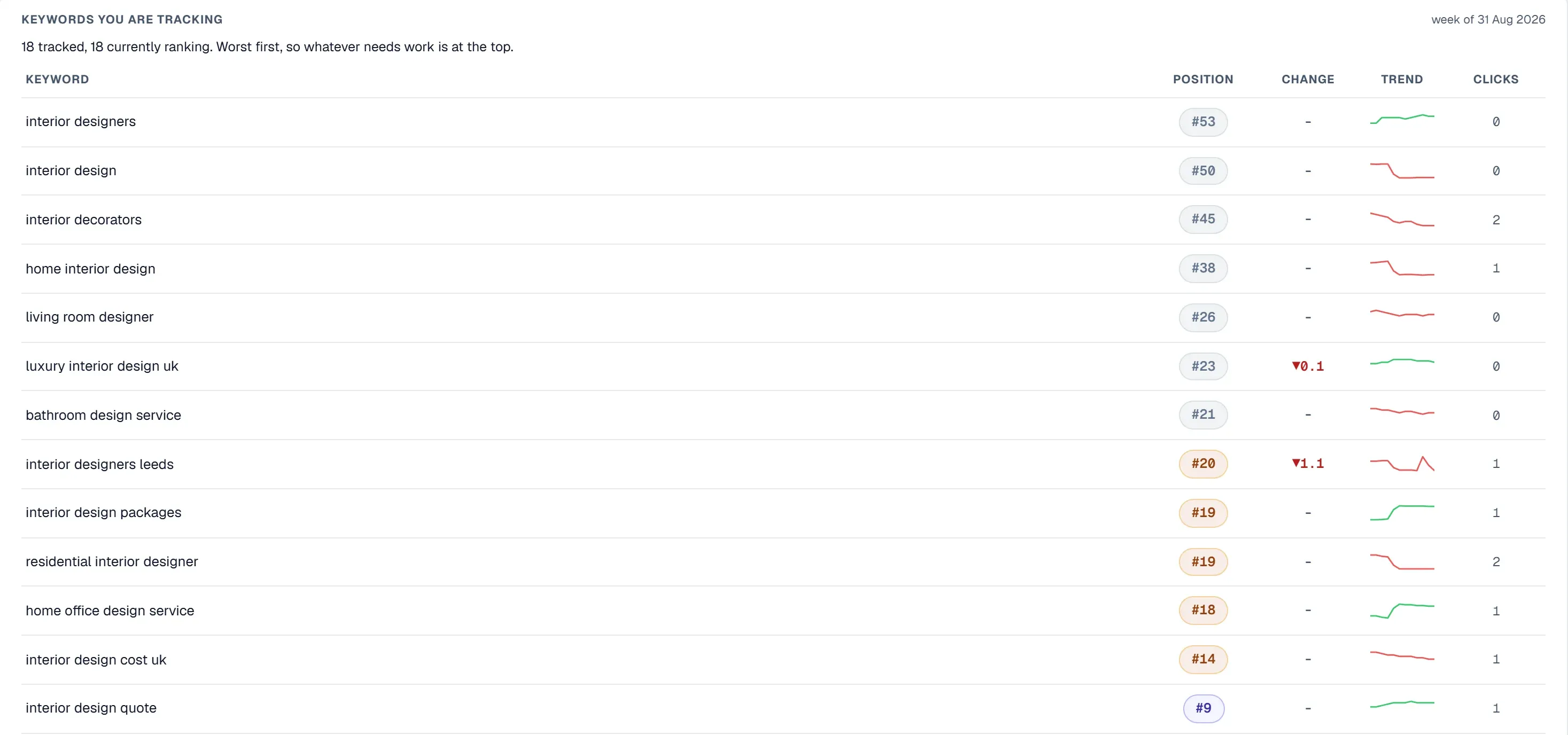
- Keyword tracking: Monitor your GSC-powered rankings alongside impressions and clicks data, with inline grouping to identify patterns across keyword clusters rather than isolated terms-essential for diagnosing whether a ranking drop affects a single page or represents a site-wide algorithmic penalty.
- Trends tab: Analyse search performance across flexible timeframes from three days to two years, helping you distinguish seasonal ranking patterns from genuine problems and calculate whether your ranking velocity indicates normal competitive movement or an urgent technical issue.
- Pages tab: Connect ranking changes to their root causes by viewing GSC page performance alongside URL inspection data, index status, mobile usability issues and canonical mismatches-the diagnostic context missing from standalone rank trackers that show position changes without explaining them.
- SEO results dashboard: Cross-reference ranking fluctuations with technical issues identified during full site scans, using category filters to quickly triage whether a drop correlates with crawlability problems, Core Web Vitals degradation or content quality signals that demand immediate remediation.
- AI Insights: Receive automated recommendations that interpret your ranking data within the context of technical audit findings and competitor movements, helping you determine whether a position loss requires emergency intervention or represents acceptable volatility within your market's normal competitive dynamics.
- Brand tracking: Monitor your AI visibility across ChatGPT, Gemini and Perplexity with neutral category prompts and ranked list positioning-addressing the critical gap in traditional rank trackers that ignore how AI platforms are fragmenting search traffic and creating new ranking battlegrounds beyond Google's top ten results.
Seobility
The platform aggregates daily ranking checks with technical crawl data and backlink surveillance but lacks sophisticated ranking velocity metrics that distinguish between algorithmic volatility and genuine performance degradation. The tool defaults to showing raw position changes without correlation frameworks that help practitioners determine whether observed movements represent actionable technical deficiencies, competitor displacement, or merely data centre variance that requires no intervention.
Conclusion
Both platforms track keyword positions but differ fundamentally in diagnostic depth and ranking change interpretation capabilities. Your choice depends on whether you prioritise integrated site health monitoring or require granular ranking velocity analysis with actionable triage protocols for position fluctuations.
If you're looking to establish systematic monitoring processes, explore How To Track Google Rankings: A Practical Guide for SEO Monitoring or discover comprehensive ranking tracking options in our Top 10 Google Keyword Tracking Tools and Platforms comparison.
Further reading
Frequently asked questions
A keyword rank tracker serves as a vital compass in SEO, providing data to understand and interpret search engine ranking fluctuations, which is crucial for strategic optimisation.
- It helps monitor position changes for target keywords.
- Successful practitioners use it to diagnose underlying reasons for shifts.
- It distinguishes meaningful changes from natural variations.
- Provides raw ranking data for actionable insights.
UtilitySEO transforms keyword rank tracking into an active diagnostic system by integrating Google Search Console data with AI insights and technical audit results.
- It explains why rankings changed, not just where you rank.
- Identifies specific fixes to restore or accelerate growth.
- Distinguishes urgent ranking drops from normal fluctuations.
- Connects GSC page performance with index status and usability issues.
UtilitySEO offers robust features for advanced keyword rank tracker analysis, including keyword clustering, trend analysis, and a dedicated pages tab for root cause identification.
- Keyword tracking groups terms to identify site-wide patterns.
- Trends tab analyzes performance across flexible timeframes.
- Pages tab links ranking changes to technical issues and URL inspection data.
- SEO results dashboard cross-references fluctuations with site scan issues.
You can use UtilitySEO's comprehensive keyword rank tracker features to diagnose a significant ranking drop by correlating position changes with technical issues and content quality signals.
- Cross-reference ranking fluctuations with full site scan results.
- Use category filters to triage crawlability problems or Core Web Vitals degradation.
- AI Insights provide automated recommendations for intervention.
- Distinguish between urgent issues and acceptable market volatility.
Yes, UtilitySEO integrates Google Search Console data directly into its keyword rank tracker to provide a richer diagnostic context beyond simple position monitoring.
- It uses GSC data alongside impressions and clicks.
- Connects GSC page performance with URL inspection data.
- Helps identify patterns across keyword clusters.
- Provides a deeper understanding of ranking changes.
Know what to fix next.
Scan your site for a clearer place to start.
About 30 seconds. No card needed.