
AI Search Visibility Audit: The Practical Playbook

A practical guide to running an ai search visibility audit, measuring presence quality and tracking AI referral traffic.
Traditional SEO audits focus on keyword rankings and backlink profiles. They miss the growing reality that users now ask questions directly to AI models. An ai search visibility audit examines how often and how accurately ChatGPT, Perplexity and Gemini cite your brand in their answers. This process moves beyond standard metrics to assess presence quality and sentiment. It reveals whether your content serves as a trusted source for answer engines. Without this step, businesses risk invisibility in the new search paradigm. This guide outlines how to measure these signals and improve your share of voice in AI-driven conversations.
Understanding Answer Engine SEO Playbook Fundamentals
The shift from keyword matching to intent matching changes how search works. AI models parse your content to extract facts rather than just displaying a link. An answer engine seo playbook starts with ensuring your data is machine-readable. AI systems prioritise structured data, clear hierarchy and authoritative citations. If your content lacks explicit answers to common user queries, the model will cite a competitor instead. This creates a gap in your digital footprint.
You must audit your presence across multiple platforms. ChatGPT, Gemini and Perplexity use different training data and retrieval methods. A brand might dominate in one but be absent in another. The audit measures brand mention rate, sentiment and the depth of the citation. It also checks for citation churn, which occurs when a model stops referencing your site after a content update or crawl block. Understanding these mechanics is the first step in securing visibility.
Measuring Impact and Presence Quality
Many audits stop at counting mentions. This approach fails to capture the value of those mentions. You need to measure presence quality to understand business impact. Presence quality involves assessing the context of the mention. Is your brand recommended as a top choice or merely listed as an alternative? Sentiment analysis reveals whether the AI associates your brand with positive or negative attributes.
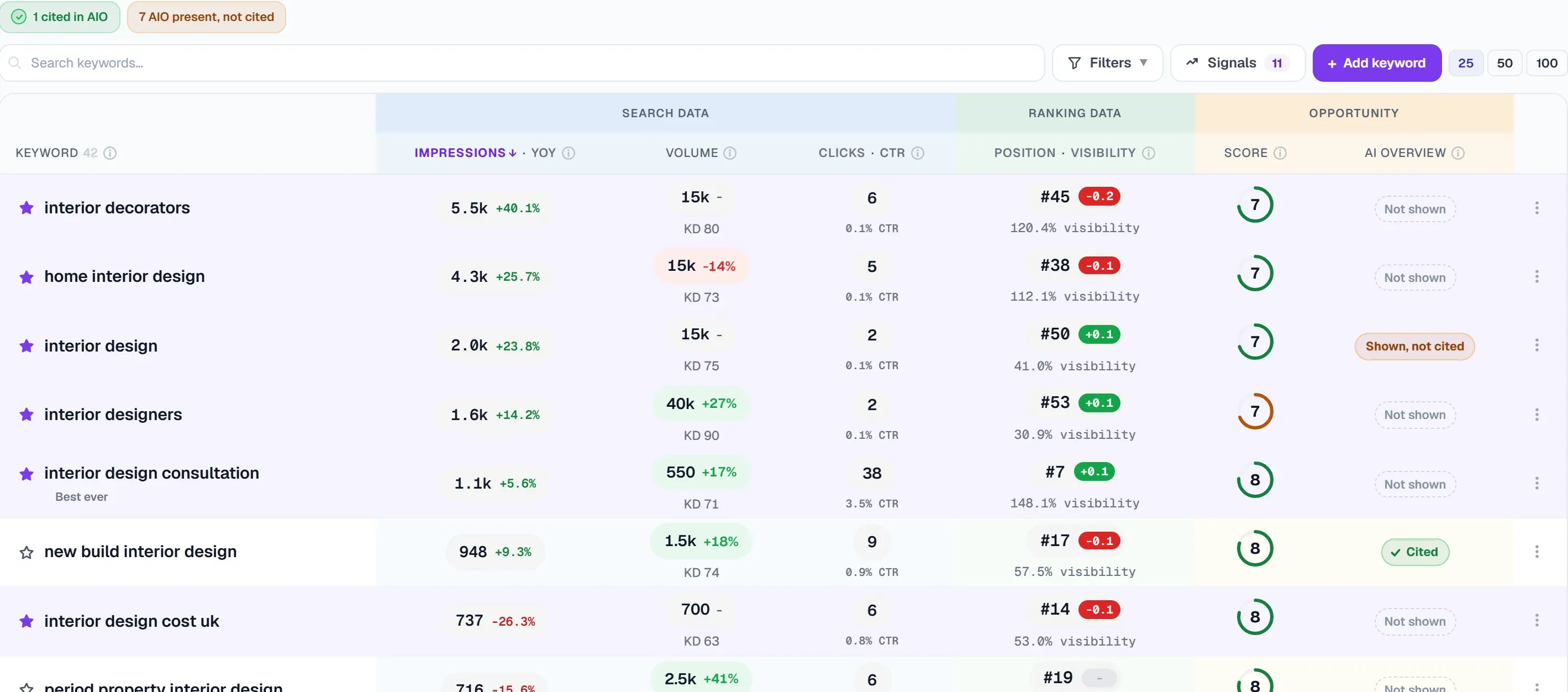
High-quality presence correlates with increased referral traffic. When an AI cites your site as a primary source, users click through to verify information. This drives chatgpt referral clicks to your domain. Tracking these clicks requires integrating analytics with AI visibility data. You can see which prompts generate the most traffic and which pages satisfy user intent best. This data allows you to prioritise content updates that directly influence revenue. Low-quality presence, such as negative sentiment or shallow mentions, requires strategic correction.
Optimising for Brave Search Grounding and Retrieval
AI models rely on grounded sources to generate accurate answers. Brave search grounding refers to the process where AI systems verify facts against current web data. If your site is blocked from crawlers or lacks clear metadata, the model cannot ground its answers in your content. This leads to hallucinations or the omission of your brand from relevant queries.
To optimise for this, you must ensure technical accessibility. Check your robots.txt file to confirm that AI crawlers are allowed access. Many sites block bots aggressively, inadvertently hiding their content from AI training and retrieval systems. Additionally, use structured data to mark up key entities and claims. This helps the AI understand the relationship between your products and user questions. A site that is technically open and semantically rich has a higher chance of being selected as a grounding source.
Practical Steps for Chatgpt Search Optimisation
Optimising for AI search requires a different content strategy. Chatgpt search optimisation focuses on providing direct, concise answers to specific questions. Long, meandering introductions reduce the likelihood of extraction. Place key facts and definitions early in the content. Use clear headings that match user intent.
You should also create content that addresses specific long-tail queries. These queries often have lower competition but higher intent. By providing a definitive answer, you increase the chance of being cited. Furthermore, monitor your competitors' mentions. If a rival is frequently cited for a specific topic, analyse their content structure. Identify gaps in their argument and provide a more comprehensive or up-to-date response. This competitive analysis informs your content calendar and ensures you are targeting high-value prompts.
How UtilitySEO Executes the Audit
UtilitySEO provides specific tools to run this audit effectively. The platform does not guess at visibility. It measures it. The Brand Tracking feature monitors mention rates across ChatGPT, Gemini, Perplexity and Claude. It calculates your share of voice against competitors. You can see exactly how often your brand appears in relevant conversations.
The AI referral traffic tracking module integrates with GA4 to attribute visitors from AI platforms. This links visibility to actual user behaviour. You can see which prompts drive the most sessions and conversions. The Robots.txt and llms.txt tester checks access for nine major crawlers. It flags if you are blocking AI search or training bots. This ensures your content is available for grounding.
For content quality, the Content audit feature assesses quality signals per page. It identifies thin content that AI models may ignore. The Fix with AI feature generates code fixes for technical issues found during the scan. For example, if a page lacks structured data, the tool suggests the necessary JSON-LD. The Multi-model audit runs the same page through several LLMs to check for consensus in how they interpret your content. This ensures your message is consistent across different AI systems.
You can also use the Citation churn alerts to know when your mention rate drops. This triggers immediate investigation. The Per-prompt trends feature shows which questions are gaining traction. This helps you update content before competitors do. By combining these features, UtilitySEO turns abstract visibility into measurable data.
Conclusion
An ai search visibility audit is no longer optional. As users shift to AI for answers, traditional SEO metrics become insufficient. You must measure how AI models perceive and cite your brand. Focus on presence quality, sentiment and technical accessibility. Use tools that track mentions across multiple platforms and attribute traffic accurately. UtilitySEO provides the specific mechanisms needed to execute this audit. Start by checking your crawler access and monitoring your brand mentions. Adjust your content to provide clear, direct answers to user questions. This approach secures your place in the evolving search landscape. Visit our Pricing page to access these audit tools. For a deeper look at content quality, read AI Content Fact Checking: What Actually Works Post-2025.
Frequently asked questions
what is an ai search visibility audit
An ai search visibility audit measures how often AI models cite your brand in their answers accurately.
- Tracks mentions across ChatGPT and Gemini
- Analyzes sentiment of brand citations
- Identifies gaps in AI training data
how do i measure ai search visibility
You measure visibility by tracking brand mention rates, sentiment analysis, and referral traffic from AI platforms.
- Monitor citation frequency in AI outputs
- Assess positive or negative brand sentiment
- Integrate analytics to track referral clicks
why are chatgpt referral clicks important for seo
ChatGPT referral clicks indicate high-quality presence, driving verified traffic to your site from AI-generated answers.
- Signals trust to search algorithms
- Increases direct user engagement rates
- Validates content accuracy for AI models
how does brave search grounding affect ai citations
Brave search grounding ensures AI models verify facts against your accessible web content to avoid hallucinations.
- Requires open robots.txt for crawlers
- Uses structured data for clarity
- Prevents brand omission from answers
can blocked crawlers hurt my ai search visibility
Yes, blocking AI crawlers prevents models from accessing your content, leading to invisibility in AI answers.
- Check robots.txt for bot access
- Ensure metadata is machine-readable
- Update content for easy extraction
what is citation churn in ai search
Citation churn occurs when AI models stop referencing your site after content updates or crawl blocks.
- Monitor sudden drops in mentions
- Audit recent technical SEO changes
- Refresh content to maintain relevance
Keep reading
See how your site actually scores
Free 30-second scan, real Google scores and a ranked fix list. No signup needed.
No credit card · Cancel anytime