
What Is a Backlink Strategy?
A backlink strategy is a planned approach to acquiring links from other websites to your own, enhancing your site's authority and visibility.
A backlink strategy is a planned approach to acquiring links from other websites to your own. This deliberate effort aims to enhance your site's authority and visibility in search engine results pages (SERPs). It involves identifying valuable link opportunities and implementing ethical methods to earn those endorsements.
Many businesses mistakenly focus on the sheer volume of backlinks rather than their quality and relevance. In reality, Google prioritises authoritative, topically relevant links, making a strategic, quality driven link building strategy more crucial than ever for sustained SEO performance.
Why Do Backlinks Still Matter to Google?
Backlinks serve as "votes of confidence" from one website to another, signalling to search engines like Google that your content is valuable and trustworthy. Google's algorithms interpret these links as indicators of authority and relevance. A robust backlink profile from reputable sources can significantly improve a page's chances of ranking higher in SERPs. Conversely, a lack of quality backlinks can hinder even excellent content from achieving visibility. The ongoing importance of backlink strategy lies in its fundamental role in establishing credibility within the vast ecosystem of the web.
Google's SEO Starter Guide confirms that "When other reputable websites link to your content, it signals to Google that your content is valuable and authoritative." This principle remains a cornerstone of how search engines evaluate content quality and relevance. Therefore, understanding how to plan backlinks effectively is vital for any website aiming for organic search success.
Earning Links Versus Building Them
The distinction between earning links and building them is subtle but important for a sustainable backlink strategy. Earning links typically refers to the natural acquisition of links due to the exceptional quality and utility of your content. When your content is so valuable that other sites organically choose to reference it, you are earning links. This often happens without direct outreach.
Building links, on the other hand, involves proactive efforts to secure links through outreach, partnerships, or specific campaigns. This could include guest posting on relevant industry blogs, participating in expert roundups, or offering resources that other sites would find useful. The key is to ensure that any link building strategy adheres to ethical guidelines. Google's spam policies explicitly warn against "creating links that were not editorially placed or vouched for by the site owner on a page" as a form of link spam. This includes excessive link exchanges, buying links, or using automated programmes to create links. Focus on creating genuine connections and providing value to the linking site.
 The glowing network illustrates how strategic backlinks link sites together, passing SEO value across the digital ecosystem.
Why Relevance Trumps Volume in Backlink Strategy
For a backlink strategy, the relevance and authority of linking domains far outweigh the sheer number of links. A single backlink from a highly authoritative website in your niche carries more weight than dozens of links from low quality, irrelevant sites. Google's algorithms are sophisticated enough to discern the topical relationship between websites. A link from a site within your industry confirms your own site's authority on that subject.
Consider a website selling gardening tools. A backlink from a prominent gardening blog or a horticultural society website would be highly relevant and beneficial. A link from an unrelated forum discussing car repairs, however, would offer minimal value, or could even be detrimental if the source is considered spammy. Focusing on relevance ensures that your backlink profile genuinely reflects your site's expertise and avoids signals that Google might interpret as manipulative. This approach is fundamental to a robust link building strategy that stands the test of time.
How to Plan Backlinks: Anchor Text Optimisation
Anchor text is the visible, clickable text in a hyperlink. It provides context about the linked page to both users and search engines. Strategic use of anchor text is a critical component of any backlink strategy. Ideally, anchor text should be descriptive and relevant to the content of the destination page.
However, over optimisation of anchor text can be detrimental. Google's algorithms can detect unnatural patterns, such as an excessive number of exact match keywords in anchor text pointing to a single page. This can be flagged as manipulative. A balanced approach involves a variety of anchor text types:
* Branded anchor text: Using your brand name (e.g., "UtilitySEO").
* Naked URL anchor text: Simply using the URL as the anchor (e.g., "https://utilityseo.com").
* Generic anchor text: Phrases like "click here," "read more," or "learn more."
* Partial match anchor text: Including a keyword along with other words (e.g., "learn about effective backlink strategy").
* Exact match anchor text: Using the precise keyword you are targeting (e.g., "backlink strategy"). This should be used sparingly.
The goal is to create a natural looking anchor text profile that provides clear context without appearing manipulative. When conducting backlink analysis for your site, review the anchor text distribution to ensure it is diverse and relevant.
Finding Gaps Against Competitors
A key step in developing a strong backlink strategy for small business is to analyse your competitors' backlink profiles. This process helps identify potential link opportunities that you might be missing. By understanding where your rivals are getting their links, you can uncover new avenues for your own link building efforts.
Here is a step by step approach to finding backlink gaps:
- Identify Top Competitors: Determine which websites consistently rank for your target keywords. These are your direct competitors in the SERPs.
- Analyse Competitor Backlink Profiles: Use a backlink analysis tool to examine the sites linking to your competitors. Pay attention to:
* Referring Domains: Which unique websites are linking to them?
* Link Quality: Are these high authority, relevant sites?
* Anchor Text: What anchor text are they using?
* Content Types: What kind of content on their site is attracting links?
- Identify Common Link Sources: Look for patterns. Are there specific industry directories, review sites, or blogs that link to multiple competitors? These are strong candidates for your own outreach.
- Find "Unlinked Mentions": Search for mentions of your competitors' brands or products that do not currently link to their site. This suggests a potential opportunity to reach out and request a link for your own similar content.
- Content Gap Analysis: Identify content on your competitors' sites that has attracted many links. If you have superior content on the same topic, or can create it, you have a strong case for earning similar links.
- Prioritise Opportunities: Focus on high quality, relevant domains that are within your reach for outreach.
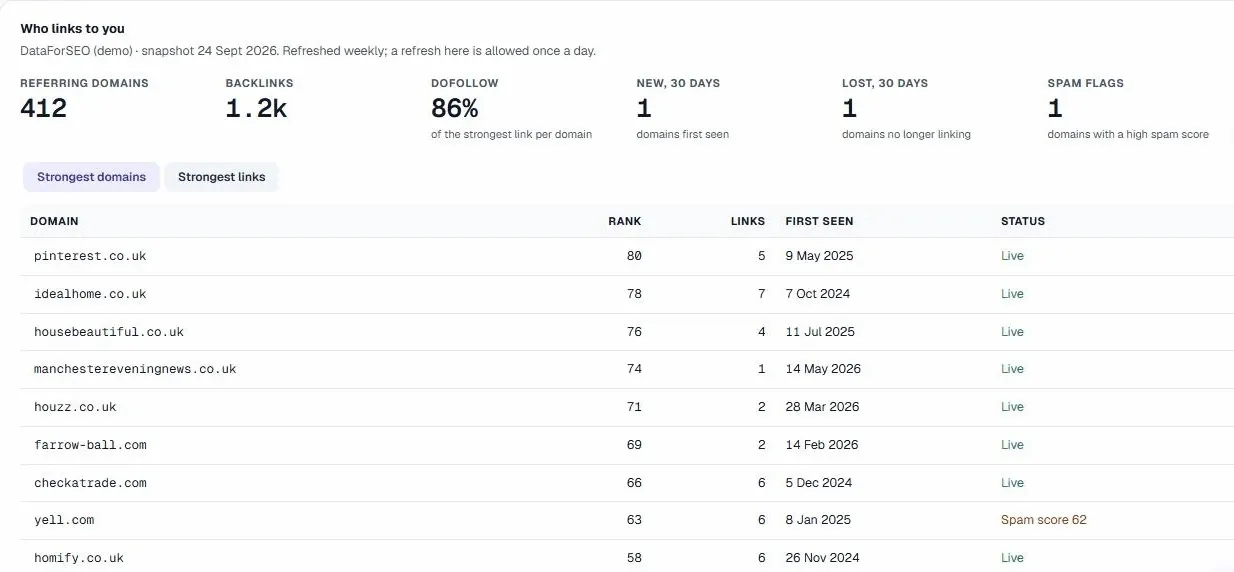
While our backlink index is smaller than dedicated link research tools, it can still provide valuable insights when joined with ranking data. You can also use our Backlink Checker to analyse a backlink profile alongside the rankings it affects, helping you understand the impact of specific links.
What Google Treats as Link Spam
Google has clear guidelines on what constitutes link spam, and violating these policies can lead to manual penalties or algorithmic demotion. Their aim is to ensure that links genuinely reflect editorial endorsement and not artificial manipulation. Understanding these practices is crucial for any ethical backlink strategy.
According to Google's spam policies, the following practices are considered link spam:
* Buying or Selling Links: This includes exchanging money for links, or posts that contain links, exchanging goods or services for links, or sending a product in exchange for a link.
* Excessive Link Exchanges: "Link to me and I'll link to you" schemes, particularly if carried out on a large scale.
* Large Scale Article Marketing or Guest Posting Campaigns: Especially those with keyword rich anchor text links. The issue arises when the primary purpose is link acquisition rather than genuinely informative content.
* Using Automated Programmes: Any software or service designed to create links to your site automatically.
* Requiring a Link for a Service: Such as requiring a link in terms of service, contract, or similar arrangement.
* Links in Footers or Templates: Widely distributed links in the footers or templates of various sites.
* Forum Comments with Optimised Links: Embedding keyword rich links in forum comments or signatures.
* Low Quality Directory or Bookmark Site Links: Submitting your site to numerous low quality web directories and bookmark sites.
* Widget Links: Embedding links in widgets that are distributed across numerous sites.
Google's stance is that any link intended to manipulate PageRank or a site's ranking in search results can be considered a violation. Therefore, a sound backlink strategy focuses on earning natural, editorially placed links that provide genuine value to users.
How to Measure Whether a Backlink Strategy Is Working
Measuring the success of a backlink strategy goes beyond simply tracking ranking improvements. While higher rankings are a positive indicator, a holistic approach considers various metrics to understand the true impact of your link building efforts.
Here are key ways to measure whether your backlink strategy is working:
- Organic Traffic Growth: Monitor the overall organic traffic to your website. Quality backlinks contribute to increased visibility, which should translate into more visitors from search engines. Use Google Analytics to track organic sessions and compare periods before and after significant link acquisition.
- Keyword Ranking Improvements: While not the only metric, track the positions of your target keywords. A successful backlink strategy should help improve rankings for specific pages and keywords. Tools like Keyword Tracking can provide daily updates on your positions.
- Referring Domains and Link Growth: Track the number of unique referring domains linking to your site, not just the total number of backlinks. A steady increase in high quality, relevant referring domains indicates a healthy link profile. Monitor the rate of new links acquired and lost links.
- Referral Traffic: A powerful benefit of quality backlinks is direct referral traffic. If a highly trafficked, relevant site links to you, you should see an increase in visitors directly from that link. Monitor referral traffic sources in Google Analytics.
- Brand Mentions and Awareness: A successful backlink strategy can lead to increased brand mentions across the web, even if not all of them are linked. This indicates growing brand awareness and authority within your niche.
- Conversion Rates: Ultimately, increased traffic and authority should contribute to business goals. Track conversion rates for organic traffic. Are visitors from improved rankings or referral links more likely to convert?
- Time on Page and Bounce Rate: Quality backlinks should drive engaged users to your site. If users are spending more time on your pages and bouncing less, it suggests the content is relevant and valuable to them.
By monitoring these diverse metrics, you can gain a comprehensive understanding of your backlink strategy's effectiveness and make data driven adjustments to optimise your efforts.
A backlink strategy is a structured plan to acquire external links to your website, crucial for enhancing search engine authority and visibility. It prioritises the quality and relevance of linking domains over mere quantity, focusing on earning natural endorsements rather than engaging in manipulative practices. Effective measurement involves tracking organic traffic, keyword rankings, referring domains, and ultimately, conversions to ensure the strategy contributes to overall business success.
Sources
Frequently asked questions
what is backlink strategy and why does it matter?
A backlink strategy is a planned approach to acquiring links that boosts your site’s authority and visibility in Google search results.
- Targets high‑quality, relevant websites
- Focuses on earned, not just built links
- Aligns with Google’s quality guidelines
how do I create a backlink strategy for a new blog?
A backlink strategy for a new blog involves identifying niche‑relevant sites and earning links through valuable content.
- Research authoritative blogs in your niche
- Produce link‑worthy guides or data studies
- Reach out for guest posts or resource mentions
why is relevance more important than volume in a backlink strategy?
Relevance is more important than volume in a backlink strategy because Google rewards links from authoritative, topically related sites.
- One niche‑specific link outranks many low‑quality links
- Relevant links signal expertise to search engines
- Reduces risk of spam penalties
can I use automated tools for a backlink strategy without penalty?
You cannot safely use automated tools for a backlink strategy because Google penalizes unnatural, non‑editorial links.
- Manual outreach ensures relevance
- Focus on genuine relationships
- Avoid link farms and mass‑generated links
what metrics should I track to measure my backlink strategy’s success?
Key metrics to track for your backlink strategy’s success include domain authority, referral traffic, and link relevance.
- Monitor referring domain authority scores
- Analyze organic traffic growth from links
- Assess anchor‑text diversity and relevance
Keep reading
See how your site actually scores
Free 30-second scan, real Google scores and a ranked fix list. No signup needed.
No credit card · Cancel anytime