Top 10 Google Keyword Ranking Monitor Tools and Platforms

Selecting an appropriate rank tracking approach requires aligning tool capabilities with organisational maturity stage and budget constraints. Early-stage...
Google keyword ranking monitor is essential for businesses to track their online presence. This blog will explore the importance of monitoring keyword rankings and creating a decision framework to determine the most suitable approach for your business stage. It will discuss when free tools are sufficient and when automated monitoring is necessary to inform your digital marketing strategy.
UtilitySEO
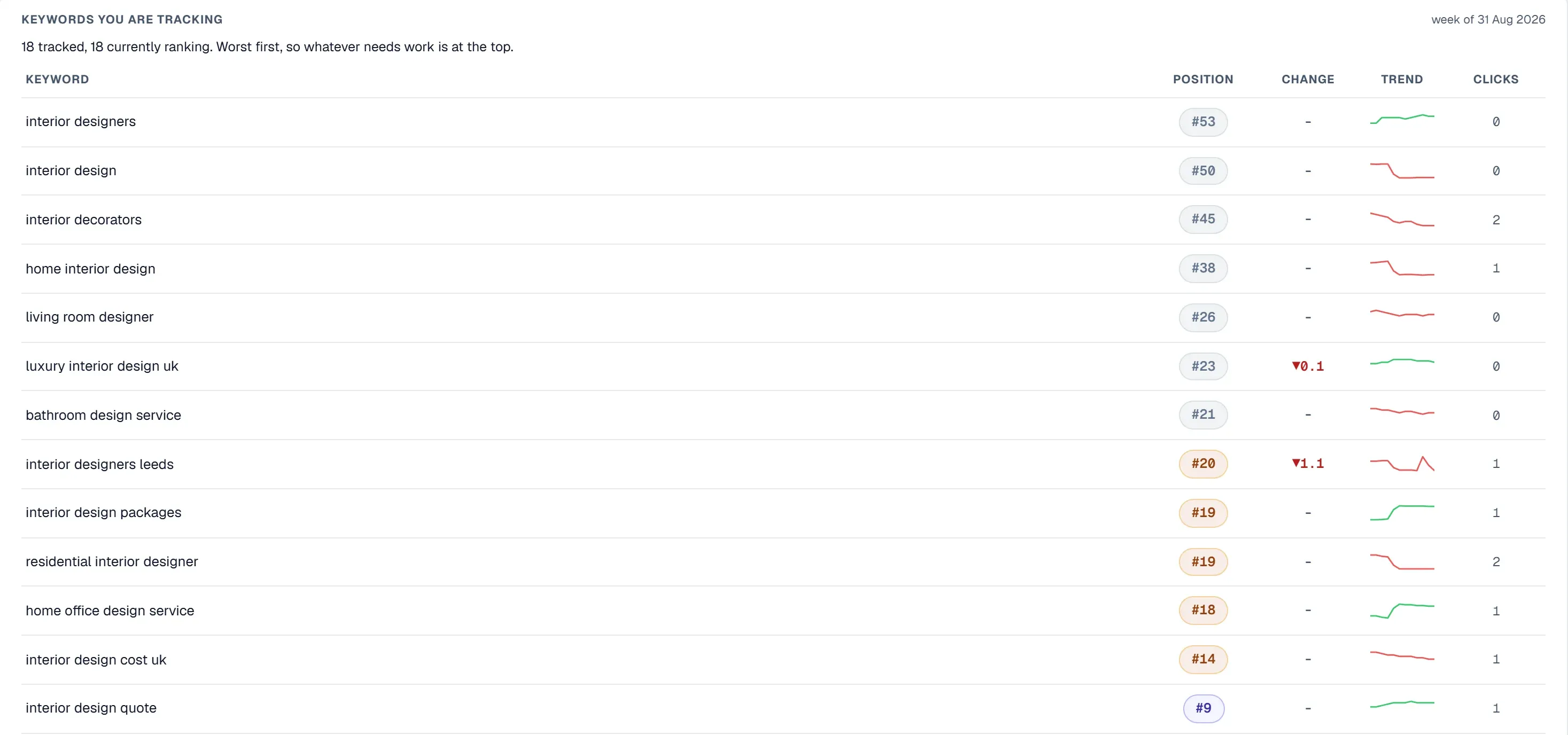
UtilitySEO delivers comprehensive keyword ranking monitoring combined with powerful SEO auditing tools, all seamlessly integrated with your Google Search Console data for complete visibility into your site's performance. By centralising your ranking data, technical insights and organic analytics in one intuitive platform, you can identify opportunities and fix issues faster than ever before. Whether you're tracking competitive keywords or diagnosing site-wide problems, UtilitySEO gives you the actionable intelligence needed to drive sustainable search growth.
SEMrush
SEMrush provides a comprehensive rank tracking module integrated within its broader platform ecosystem. The tool monitors keyword positions across multiple search engines and locales, with historical data tracking and SERP feature visibility. Integration with backlink analysis, content marketing tools, and technical SEO capabilities creates a heavyweight all-in-one solution for enterprise teams. Setup requires navigating a complex interface with steep learning curves for new users. The platform's pricing structure escalates significantly with tracking volume requirements. White label reporting functionality appeals to agencies, though the feature density often exceeds requirements for smaller operations seeking focused ranking visibility.
Ahrefs
Ahrefs incorporates rank tracking within its platform architecture alongside comprehensive backlink intelligence and content exploration capabilities. The tool offers keyword position monitoring with historical trends and SERP volatility metrics. Real-time tracking updates occur periodically rather than continuously, with limitations on update frequency depending on subscription tier. Search volume data integration provides contextual ranking analysis. The platform excels in competitive landscape mapping but demands substantial investment for access. Organisations requiring deep link authority insights alongside ranking data find value in the consolidated approach, though single purpose rank monitoring users encounter unnecessary feature overhead.
Moz
Moz's rank tracking solution emphasises accessibility for mid-market SEO teams through its Pro subscription tier. The tool tracks keyword positions with simplified reporting and competitive benchmarking against tracked domain competitors. Integration with Moz's domain authority metrics and on-page optimisation recommendations creates workflow efficiency for users already embedded in the Moz ecosystem. The tracking methodology relies on proprietary tracking infrastructure with periodic position updates. Customisation options remain limited compared to enterprise-grade alternatives. Smaller teams and individual practitioners often find the feature set adequate, though agencies managing multiple client accounts encounter scaling constraints.
Screaming Frog
Screaming Frog operates as a localised rank tracking solution rather than a cloud-based monitoring system. The tool requires desktop software installation and crawls websites to identify target keywords and track position changes through manual SERP queries. This approach eliminates recurring subscription costs but necessitates ongoing operational overhead for position checks. Data storage remains local to individual installations, creating collaboration challenges across team environments. Enterprise organisations managing hundreds of keywords encounter performance bottlenecks with desktop-only infrastructure. The tool serves technically proficient users comfortable with manual data management workflows over automated cloud monitoring alternatives.
Google Search Console
Google Search Console functions as the foundational free rank visibility layer within Google's ecosystem. The platform displays average keyword position data, click-through rates, and impression metrics directly from Google's search index. Limitations include position data aggregation, absence of historical trend analysis, and seven-day reporting delays. The tool provides no competitive benchmarking or ranking alerts for position movements. Organisations requiring comprehensive monitoring capabilities beyond Google's native data export must integrate supplementary rank tracking tools. Micro-businesses and content creators seeking cost-free baseline visibility benefit from GSC's native functionality, though serious SEO practitioners quickly encounter data limitation constraints.
Sitebulb
Sitebulb functions primarily as a technical SEO auditing platform with supplementary rank tracking functionality embedded within crawl reports. The tool generates detailed on-page analysis and internal linking assessments rather than positioning rank monitoring as the core feature. Rank tracking integration remains secondary to technical auditing workflows. Users seeking dedicated ranking visibility must utilise alternative specialised tools. Technical SEO teams already using Sitebulb for site audits find convenience in consolidated reporting, though standalone rank monitoring requirements necessitate platform switching for focused position tracking.
Mangools
Mangools offers rank tracking through its SERPChecker module within a lightweight, affordable toolset architecture. The platform provides daily ranking updates with historical position graphs and competitor position visibility. Simplicity characterises the interface design philosophy, appealing to solo practitioners and small agencies avoiding complex enterprise platforms. Tracking limitations emerge at higher keyword volumes, with update frequencies dependent on subscription level. The tool lacks advanced filtering, custom alert configuration, and sophisticated reporting customisation found in premium alternatives. Budget-conscious teams prioritising affordability over advanced functionality find the cost structure appealing, though scaling to larger keyword portfolios becomes problematic.
SE Ranking
SE Ranking combines rank tracking with website audit and backlink monitoring capabilities within a unified platform. Position tracking updates occur daily with comprehensive historical analytics and automated alert systems for significant rank movements. The tool supports white label reporting for agencies managing multiple client domains. Competitive position intelligence provides benchmarking context against tracked competitors. The platform's pricing remains considerably lower than enterprise alternatives whilst maintaining feature parity for mid-market operations. Integration complexity and limited customisation options present constraints for organisations requiring bespoke implementation approaches.
Serpstat
Serpstat integrates rank tracking within a larger suite encompassing competitive analysis and keyword research functionality. The platform monitors keyword positions across multiple search engine regions and devices with historical position tracking. The tool emphasises competitive intelligence gathering alongside ranking visibility. API access enables custom integration workflows for technical teams. The platform's interface complexity requires training investment for new users. Organisations valuing competitive benchmarking alongside ranking data find the feature integration valuable, though simplified rank-only monitoring users encounter unnecessary analytical overhead within the platform.
Ubersuggest
Ubersuggest provides rank tracking within an affordable, beginner-friendly platform targeting emerging marketers and small business owners. The tool tracks keyword positions with simplified reporting and limited historical data depth. Integration with content recommendations and keyword research functionality creates workflow continuity for content creators. The platform's analytics capabilities remain considerably lighter than enterprise alternatives. Tracking limitations emerge at higher keyword volumes and search region complexity. Organisations in early SEO maturity stages benefit from the accessible pricing and simplified interface, whilst those requiring enterprise-grade monitoring capabilities quickly outgrow the platform's constraints.
Rank Math
Rank Math functions as a WordPress-native SEO plugin with integrated rank tracking functionality for website owners using WordPress infrastructure. The tool monitors keyword positions directly from the WordPress dashboard, eliminating external platform dependency for basic ranking visibility. Position tracking updates depend on WordPress infrastructure capabilities rather than dedicated cloud monitoring. Premium membership unlocks additional rank tracking queries and historical data access. The platform appeals specifically to WordPress ecosystem users, though technical constraints limit scalability for large-scale keyword portfolios. Agencies managing multiple non-WordPress client properties require alternative rank tracking solutions despite Rank Math's convenience for WordPress specific implementations.
Woorank
Woorank combines rank tracking with SEO auditing and competitive analysis within a web-based platform prioritising accessibility. The tool tracks keyword positions and generates comprehensive SEO audit reports within unified workflows. Integration with local search visibility metrics and mobile optimisation assessments supplements ranking data. The platform targets local SEO practitioners and small agencies rather than enterprise teams. Feature depth remains limited compared to specialised rank tracking platforms. Organisations seeking consolidated local SEO management find the bundled approach convenient, though dedicated rank tracking users encounter limited customisation and advanced filtering capabilities.
Seobility
Seobility provides rank tracking functionality within a German-founded platform emphasising affordability and ease of use. The tool tracks keyword positions with daily updates and simplified reporting interfaces designed for non-technical users. Integration with on-page auditing and backlink checking creates bundled SEO visibility. The platform's pricing structure targets freelancers and small agencies with budget constraints. Advanced filtering, custom alert rules, and sophisticated automation remain underdeveloped compared to enterprise platforms. Organisations prioritising cost efficiency and straightforward position tracking without advanced feature requirements find the platform suitable, though scaling limitations emerge with larger keyword portfolios and complex tracking requirements.
Majestic
Majestic operates as a specialised backlink analysis platform with supplementary rank tracking capabilities rather than a dedicated ranking monitor. The tool's core strength centres on link intelligence and domain authority metrics, with rank tracking serving as secondary functionality. Position tracking updates occur periodically within the platform's infrastructure. Users requiring comprehensive rank monitoring alongside backlink research find consolidated reporting beneficial. Organisations seeking specialised rank tracking must integrate additional tools despite Majestic's link analysis prominence. Link-focused SEO teams leveraging Majestic's core backlink intelligence may utilise rank tracking as supplementary reporting, though dedicated ranking visibility requirements necessitate alternative platform selection.
Raven Tools
Raven Tools provides rank tracking integrated within a client management platform architecture designed for agencies. The tool monitors keyword positions across multiple search engines and locales with historical trend analysis. White label reporting and client portal functionality streamline agency workflows for multiple account management. Social media monitoring and paid advertising integration supplements rank tracking functionality. The platform's emphasis on agency operations creates complexity for solo practitioners and small teams not requiring client account management. Enterprise agencies find the consolidated approach efficient, though organisations prioritising focused rank monitoring encounter unnecessary operational overhead within the platform.
Frequently asked questions
what is a google keyword ranking monitor and why do I need one
A google keyword ranking monitor tracks where your website appears in search results for target keywords over time. This helps you measure SEO success and stay competitive.
- Monitor position changes daily or weekly across search engines
- Identify which keywords drive traffic and conversions
- Spot ranking drops before they impact organic traffic
- Compare your rankings against competitor performance
how often should I check my keyword rankings with a ranking monitor tool
Most keyword ranking monitor tools update daily, though frequency depends on your SEO maturity and budget. Established sites typically benefit from daily tracking.
- Early-stage businesses: Weekly tracking is usually sufficient
- Growing businesses: Daily updates catch ranking volatility faster
- Enterprise teams: Real-time or hourly monitoring for competitive keywords
- Check rankings after major content or technical changes
is it worth paying for a keyword ranking monitor or should I use free tools
Free keyword ranking monitor options exist but lack features needed for serious SEO strategies. Paid tools provide automation, historical data, and competitive insights that free alternatives cannot.
- Free tools work for tracking 5–10 keywords manually
- Paid platforms automate tracking and save hours monthly
- Advanced features include SERP features and device-level data
- ROI typically exceeds tool cost within 2–3 months
how do I integrate a keyword ranking monitor with google search console data
Modern keyword ranking monitor platforms connect directly to Google Search Console to combine ranking positions with real impressions and clicks. This creates a complete performance picture.
- Authorize GSC account within your monitoring tool settings
- View rankings alongside actual GSC traffic metrics
- Group keywords by topic or campaign for easier analysis
- Cross-reference rankings with organic click-through rates
what features should I look for in a keyword ranking monitor tool
A quality keyword ranking monitor should track positions, show competitor data, and integrate with your analytics. Look for automation, historical trends, and actionable alerts.
- Daily or real-time position tracking across locales
- Device and country performance breakdown capabilities
- SERP feature visibility and rich snippet tracking
- Competitor ranking comparison and win/loss alerts
- Export and white-label reporting for agencies
can a keyword ranking monitor help me identify seo opportunities and fix issues
Yes, a keyword ranking monitor reveals ranking volatility, competitive gaps, and technical issues affecting visibility. Combined with SEO auditing, it drives actionable improvements.
- Spot ranking drops that signal technical or content problems
- Identify keywords losing positions to competitors
- Track momentum for keywords climbing search results
- Prioritize content updates based on ranking trends and search volume
Ready to improve your SEO?
Get started with UtilitySEO free — no credit card required.
Get Started Free