
Answer Engine SEO Playbook: The Practical Playbook
A practical guide to optimizing for AI answer engines, covering content structure, technical SEO, and measurement strategies.
Search behaviour has shifted fundamentally. Users no longer click through to websites as frequently. They accept answers directly from AI interfaces. This change demands a new approach to optimisation. The answer engine seo playbook outlines how to structure content for extraction by Large Language Models. It moves beyond traditional keyword ranking. It focuses on becoming a cited source. This guide covers technical adjustments, content structuring, and measurement strategies. It provides specific tactics for different business types. You will learn how to maintain visibility in this new landscape.
Understanding the Shift to Answer Engines
Traditional SEO ranked pages on a results page. Answer Engine Optimization (AEO) aims for citation within an AI-generated response. Models like ChatGPT and Perplexity parse web content to generate answers. They prefer structured, authoritative, and concise information. Google has also integrated AI Overviews into many searches. This reduces organic click-through rates significantly.
The core mechanism involves making your content easily extractable. AI models look for clear answers to specific questions. They value named sources and dated statistics. You must structure your headings as questions. You must provide direct answers in the first paragraph. This format helps the model identify the relevant snippet. It also improves user experience for human readers.
Tailoring Strategies for Different Business Types
A generic strategy does not work for every industry. You must adapt your answer engine seo playbook to your specific sector.
E-commerce businesses face unique challenges. Users ask about product features and comparisons. AI models need clear attribute data. Use schema markup for Product and Review entities. Ensure your product descriptions are concise and factual. Avoid marketing fluff that confuses extraction algorithms.
B2B SaaS companies rely on authority. Decision-makers ask complex technical questions. Create detailed FAQ pages that address specific pain points. Use clear headings that mirror user queries. Cite your own data or original research. This builds trust with both the AI model and the user.
Local businesses depend on proximity and consistency. Ensure your Name, Address, and Phone Number are consistent across all platforms. Use LocalBusiness schema. Answer common questions about opening hours and services. This helps AI models provide accurate local results.
Content Structuring for Extraction
Content structure dictates whether an AI model cites you. You must make your pages machine-readable. This involves more than just good writing. It requires technical precision.
Use question-based headings. These signal to the model that the following text answers a specific query. Keep paragraphs short. Long blocks of text are harder to extract. Use bullet points for lists. This makes data easier to parse.
Include named sources. AI models prefer citing specific organisations or experts. Mention your company name and key personnel. This builds entity recognition. Use dated statistics. Old data loses relevance quickly. Update your content regularly. This signals freshness to the model.
Measuring AI Visibility and Traffic
Measuring success in this new landscape requires new tools. Traditional analytics often miss AI-driven traffic. You need to track where your visitors come from. This is where ai search referral tracking becomes essential.
Many platforms still show these visits as direct traffic. This obscures the true source of your audience. You must identify referrals from ChatGPT, Perplexity, and other AI interfaces. This data helps you understand which content performs well in AI answers.
You can use AI Search Visibility Audit: The Practical Playbook to deepen your understanding of these metrics. This resource provides a deeper dive into the technical aspects of tracking.
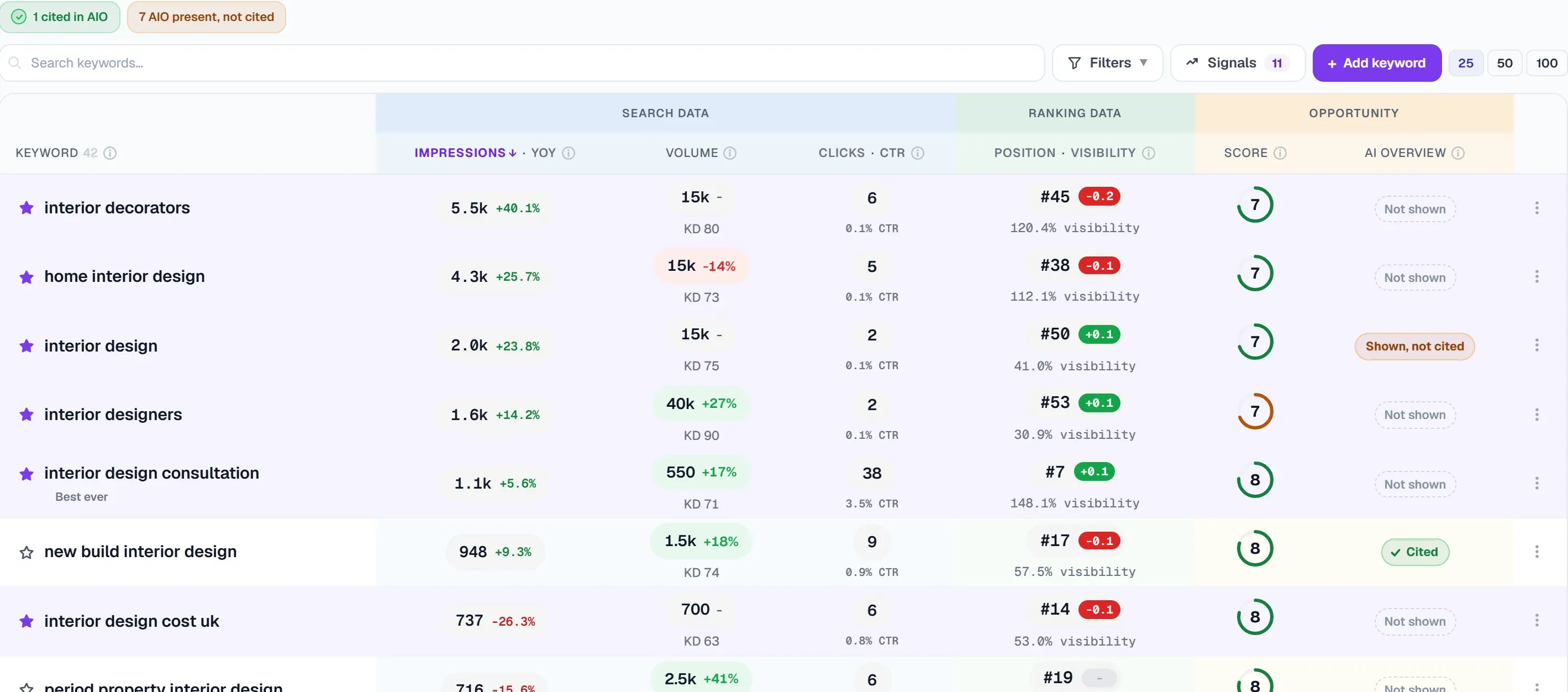
UtilitySEO offers specific tools for this purpose. The AI referral traffic tracking feature identifies visitors from AI platforms. It separates this traffic from traditional search. This allows you to measure the impact of your AEO efforts. You can see which pages drive the most AI-generated traffic.
Dealing with Traffic Drops and Visibility Issues
Traffic patterns change rapidly in the age of AI. You may experience an ai search traffic drop without any obvious cause. This often happens when AI models update their training data or change their citation preferences.
You need to monitor these changes closely. Do not wait for significant declines to act. Regular audits help you identify issues early. Look for pages that have lost their position in AI answers. Check if your competitors are now being cited instead.
An ai search visibility audit helps you pinpoint these issues. It analyses your content against current AI preferences. It checks for technical errors that might prevent extraction. It also reviews your schema markup for accuracy. This audit provides a clear picture of your AI visibility.
UtilitySEO performs these audits automatically. The Brand Tracking feature monitors mention rates across major AI platforms. It alerts you when your citation rate drops. This allows you to react quickly. You can update your content to regain visibility.
Ethical Considerations and Risks
Relying heavily on AI traffic carries risks. You must consider the ethical implications. AI models can misinterpret your content. They may present your information in a misleading context. This can damage your brand reputation.
You should monitor how AI models use your content. Check the context in which you are cited. Ensure the AI is not distorting your message. If you find errors, request corrections. Some platforms allow you to flag inaccuracies.
There is also a risk of over-optimisation. Focusing too much on AEO can hurt traditional SEO. You must balance both strategies. Do not sacrifice readability for machine extraction. Write for humans first. Optimize for machines second. This approach ensures long-term sustainability.
Technical Implementation with UtilitySEO
Implementing an answer engine seo playbook requires precise technical execution. UtilitySEO provides the tools to do this effectively.
The Single page scan checks over 100 ranking factors. It provides a health score and plain-English fixes. This helps you identify technical issues that hinder extraction. The JavaScript rendering feature ensures React and Vue sites are scanned correctly. Many modern sites rely on JavaScript for content. Without proper rendering, AI models may see empty pages.
The Schema generator helps you create accurate markup. It supports Person, Organization, Article, and FAQPage schemas. This ensures AI models understand your content structure. The Canonical tag audit checks for self-referencing and cross-domain issues. This prevents duplicate content problems that confuse AI models.
You can also use the Content audit feature. It analyses quality signals per page. It identifies thin content that may not be cited. The Duplicate content detection uses simhash and Hamming distance. This ensures your content is unique and valuable.
Conclusion
Adapting to answer engines is no longer optional. It is a necessity for sustainable traffic growth. The answer engine seo playbook provides the framework for this adaptation. You must tailor your strategy to your industry. You must structure your content for extraction. You must measure your AI visibility accurately.
UtilitySEO offers the tools to implement this strategy. From technical audits to traffic tracking, it covers every aspect. You can start with a Pricing plan that fits your needs. You can follow the Workflow to get started.
Do not ignore the shift. Embrace it with a clear, data-driven approach. Monitor your citations. Update your content. Maintain your visibility. This is the future of search.
Frequently asked questions
what is an answer engine seo playbook
An answer engine seo playbook is a strategic guide for optimizing content to be cited by AI models like ChatGPT.
- Structure headings as direct questions
- Provide concise answers immediately
- Use schema markup for data
how do I structure content for AI extraction
Structure content for AI extraction by using question-based headings and keeping paragraphs short for easier parsing.
- Avoid long blocks of text
- Use bullet points for lists
- Include named sources explicitly
why is my content not being cited by AI
Your content may lack clear structure, authoritative sources, or fresh data that AI models prioritize for citations.
- Update statistics regularly
- Cite specific experts or organizations
- Ensure technical SEO precision
how should e-commerce businesses optimize for answer engines
E-commerce businesses should use product schema markup and concise descriptions to help AI models extract accurate attribute data.
- Remove marketing fluff
- Highlight key product features
- Include review entity data
can I track traffic from AI search engines
You can track traffic from AI search engines using specialized referral tracking tools designed for this new landscape.
- Monitor new referral sources
- Analyze citation frequency
- Adjust strategies based on data
Keep reading
See how your site actually scores
Free 30-second scan, real Google scores and a ranked fix list. No signup needed.
No credit card · Cancel anytime