

SEO
GSC Rank Tracking for SaaS Marketing Teams
Learn how effective gsc rank tracking helps SaaS teams optimise content strategy and improve organic visibility.
Understanding the Mechanics of Rank Tracking
Search engines update rankings dynamically based on user behaviour and algorithmic adjustments. A static snapshot of position fails to capture the volatility inherent in search results. Proper gsc rank tracking involves correlating daily impression fluctuations with specific query intents. When a page drops from position three to position seven, the loss of clicks is often disproportionate to the positional change. This phenomenon is known as the C-shaped curve of click-through rates. By analysing these shifts, marketers can prioritise pages that sustain top-three positions. The goal is to stabilise visibility for high-intent terms while nurturing long-tail queries.
Many teams rely on manual exports to analyse this data. A standard gsc data export provides a static CSV file containing impressions and clicks for a selected period. This method lacks automation and historical continuity. It forces analysts to recreate reports weekly, leading to inconsistent data handling. Automated tools ingest this data daily, allowing for continuous monitoring of position changes. This automation removes human error from the reporting process. It also ensures that every query is tracked against a consistent baseline.
Strategic Benefits for SaaS Growth
SaaS products rely on predictable customer acquisition costs. Organic search provides a low-cost channel if managed correctly. Tracking rankings allows teams to forecast traffic volume based on position stability. A keyword difficulty estimate helps determine whether investing in content for a specific term is viable. High-difficulty terms may require significant backlink acquisition, while low-difficulty terms offer quick wins. This assessment prevents wasted resources on unattainable keywords.
Identifying cannibalisation is another critical benefit. When multiple pages target the same query, they compete against each other in the SERPs. This internal competition dilutes ranking signals and confuses search engines. Effective rank tracking highlights these conflicts by grouping keywords by topic. Teams can then consolidate content or adjust canonical tags to resolve the issue. This consolidation strengthens the authority of the primary page, improving its chance of ranking higher.
Real-world application involves monitoring feature-specific landing pages. For example, a SaaS company launching a new API endpoint should track related technical queries. If impressions rise but clicks stagnate, the snippet may need optimisation. If clicks drop despite stable positions, user intent may have shifted. These insights drive immediate on-page adjustments rather than vague content refreshes.
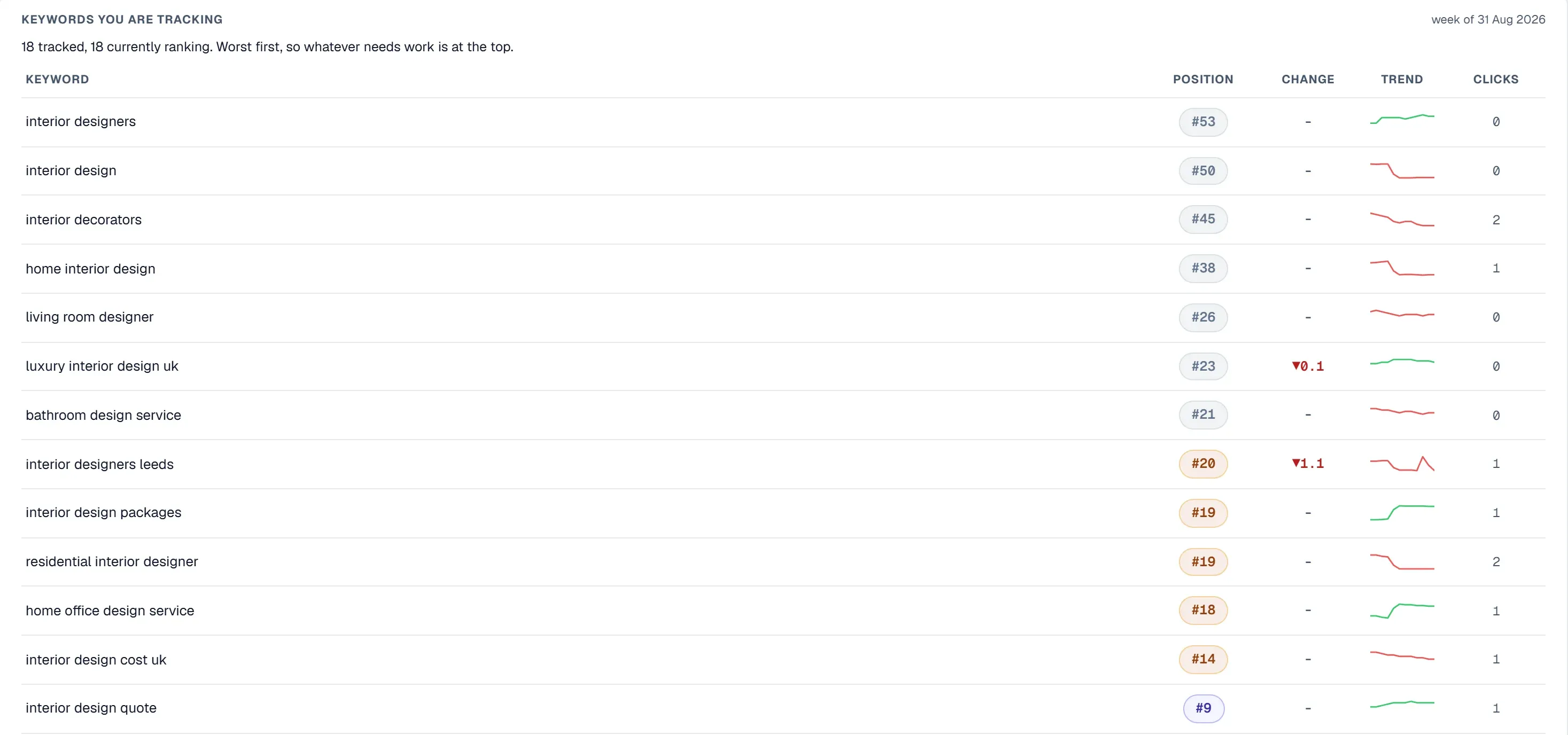 Tracked keywords with their position, change, a trend sparkline and clicks, worst first.
Enhancing Data with UtilitySEO Features
UtilitySEO integrates directly with Google Search Console to automate this analysis. The platform uses a gsc plus tool architecture to enrich raw data with historical context. It does not merely display current positions but tracks daily changes and best-ever flags. This depth allows teams to see how algorithm updates impact specific pages. The algorithm update overlay correlates ranking drops with confirmed Google update dates. This correlation helps distinguish between technical issues and broader algorithmic shifts.
The platform also offers a keyword difficulty estimate for every tracked query. This metric is derived from competitor analysis and historical volatility. It provides a clear signal on whether a keyword is worth pursuing. Additionally, the untracked keyword discovery feature identifies queries appearing in Search Console that are not in the tracked set. This ensures no high-volume opportunity is missed.
Teams can use the one-click keyword tracking from GSC data feature to add new queries instantly. This removes the friction of manual setup. The rank tracking module provides sparklines for visual trend analysis. These sparklines make it easy to spot sudden drops or gradual declines. The data is exportable via CSV, allowing for further analysis in external tools. You can explore more about this process in our GSC Rank Tracker for SaaS Marketing Teams guide.
Implementing a Sustainable Tracking Workflow
A sustainable workflow relies on regular audits and automated alerts. UtilitySEO supports this with scheduled weekly re-crawls and daily data imports. The traffic-drop diagnostic tool isolates the cause of volume decreases. It determines whether the drop stems from lost rankings, fewer searches, or losing the click to a competitor. This precision guides the response strategy. If rankings are stable but clicks drop, the meta description or title may need updating.
For teams managing multiple projects, the multi-project workspaces feature organises data efficiently. Role-based access ensures that analysts see only relevant projects. The watch mode provides real-time alerts for significant ranking changes. This immediacy allows for rapid response to negative SEO events or technical errors. The platform also integrates with GA4 to connect rankings with conversion data. This link between visibility and revenue is crucial for SaaS businesses. You can read more about connecting these data points in our GA4 SEO Integration for Conversion Attribution article.
Conclusion
Effective gsc rank tracking transforms raw search data into strategic decisions. It moves teams from reactive fixes to proactive content management. By understanding the mechanics of ranking volatility and keyword difficulty, SaaS marketers can allocate resources more efficiently. UtilitySEO provides the technical infrastructure to automate this process. Its features for cannibalisation detection, difficulty estimation, and historical tracking remove manual effort. This allows teams to focus on creating high-quality content and fixing technical issues.
Start by auditing your current tracking setup. Identify gaps in your data coverage and implement automated solutions. Visit our Pricing page to see how UtilitySEO can streamline your SEO workflow. For a deeper dive into technical audits, check out our Google Freshness Audit for SaaS Marketing Teams guide.
Frequently asked questions
GSC rank tracking monitors keyword positions from Search Console to optimize SaaS content strategies.
- Connects raw impression data with historical position context.
- Identifies high-value keywords driving actual conversions for teams.
- Prevents reliance on vanity metrics like simple click counts.
Rankings drop due to algorithm updates, increased competition, or content cannibalisation within your site.
- Check for multiple pages competing for the same query.
- Analyze if user intent has shifted for specific terms.
- Review snippet performance if impressions rise but clicks drop.
Use specialized tools to ingest daily Search Console data and monitor position changes automatically.
- Eliminates manual CSV exports and human error in reporting.
- Provides continuous monitoring against a consistent baseline for accuracy.
- Ensures every query is tracked with historical continuity.
Yes, it stabilizes organic traffic forecasts and reduces customer acquisition costs for SaaS businesses.
- Helps forecast traffic volume based on position stability trends.
- Identifies low-difficulty keywords for quick content wins.
- Prevents wasted resources on unattainable high-difficulty search terms.
Group keywords by topic in GSC to identify conflicting pages and consolidate content.
- Adjust canonical tags to resolve internal competition issues.
- Strengthen authority of the primary page for higher rankings.
- Stop diluting ranking signals across multiple similar landing pages.
Know what to fix next.
Scan your site for a clearer place to start.
About 30 seconds. No card needed.