
Interne linkaanbevelingen: de workflow voor anker en doelpagina
Leer werken met geavanceerde interne linkaanbevelingen, met focus op ankertekst en doelpagina, voor betere SEO en gebruikerservaring.
Goede interne linkaanbevelingen zijn essentieel om gebruikers en zoekmachines door je site te leiden. Deze workflow draait om het zorgvuldig kiezen van ankertekst en het bepalen van de beste doelpagina's. Als je snapt hoe je een stevige interne linkgraaf bouwt, wordt je content beter vindbaar en verdeel je autoriteit over je hele domein. In dit artikel bekijken we geavanceerde strategieën om kansen voor interne links te vinden en de impact ervan te meten.
Waarom interne links strategisch belangrijk zijn
Interne links zijn meer dan navigatie. Ze leggen verbanden tussen je content, geven zoekmachines aan wat belangrijk is en verkleinen de crawldiepte van belangrijke pagina's. Een goed doordachte interne linkgraaf verbetert de gebruikerservaring doordat hij relevante routes door je site biedt. Ook helpt hij zoekmachines de structuur van je site en de thematische verbanden tussen pagina's te begrijpen. Slechte interne links kunnen leiden tot weespagina's en verwaterde autoriteit.
Kansen voor interne links vinden
De juiste kansen voor interne links vinden, zeker op grote sites, vraagt om een datagedreven aanpak. Een eenvoudige audit vindt kapotte links of redirectketens, maar een diepere analyse brengt strategische plekken aan het licht. Kijk naar pagina's met veel autoriteit die linkwaarde kunnen doorgeven aan nieuwere of minder zichtbare content. Zoek pagina's die op vergelijkbare zoekwoorden ranken, want dat wijst op een thematisch verband. Een blogpost met veel autoriteit over 'tips voor duurzaam tuinieren' kan bijvoorbeeld linken naar een productpagina voor 'biologische compost', met een beschrijvende verdeling van ankerteksten.
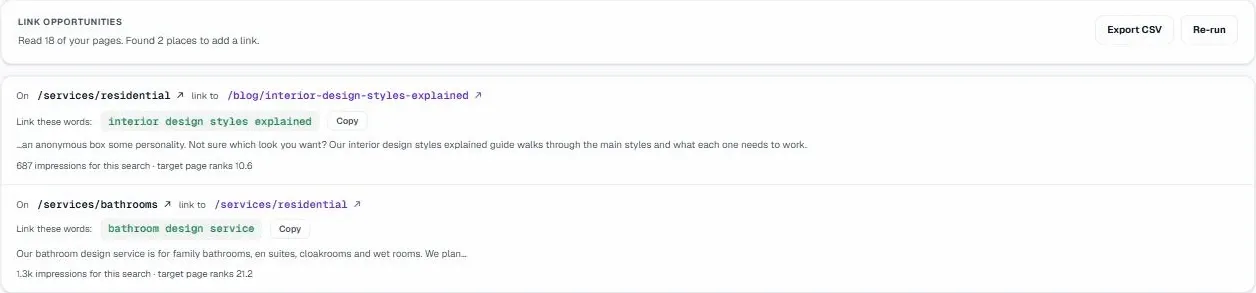
UtilitySEO heeft specifieke tools om deze kansen precies aan te wijzen. De functie Interne linkaanbeveler stelt de exacte woorden, de bronpagina en het doel voor. Zo ga je van handmatig gissen naar concrete aanbevelingen. De functie Detectie van weespagina's vindt pagina's waar geen enkele interne link naartoe wijst, zodat je ziet welke content in de structuur van je site moet worden opgenomen. Een analyse van de crawldiepte helpt je bovendien pagina's te vinden die te veel klikken van de homepage af liggen en dus waarschijnlijk meer directe interne links nodig hebben.
Ankerteksten goed verdelen
Ankertekst is de klikbare tekst in een interne link. Die geeft gebruikers en zoekmachines context over de inhoud van de gelinkte pagina. Algemene ankertekst zoals 'klik hier' voegt weinig toe. Gebruik liever beschrijvende formuleringen met zoekwoorden die het onderwerp van de doelpagina precies weergeven. Een link naar een pagina over 'milieuvriendelijke schoonmaakmiddelen' krijgt bijvoorbeeld de ankertekst 'milieuvriendelijke schoonmaakmiddelen' of 'duurzame huishoudreinigers'.
Te veel optimalisatie van ankertekst kan juist schaden. Kies voor natuurlijke taal en een gevarieerde reeks relevante formuleringen. Door je bestaande verdeling van ankerteksten te analyseren, zie je waar het beter kan. Gebruiken veel links precies dezelfde woorden? Wissel ze dan af met synoniemen of verwante longtail-zoekwoorden. Zo blijft je interne linkgraaf gezond en natuurlijk.
De effectiviteit van interne links meten
De impact van interne links meten is meer dan alleen controleren op kapotte links. Richt je op statistieken die betrokkenheid en conversieratio's laten zien. Volg hoe interne links de route van gebruikers beïnvloeden. Klikken gebruikers door naar gerelateerde content? Verlaagt een nieuwe aanpak voor interne links het bouncepercentage op specifieke pagina's?
Directe conversietracking voor interne links kan lastig zijn, maar je kunt de effectiviteit afleiden door veranderingen in posities, verkeer naar doelpagina's en betrokkenheidsstatistieken in je analytics te volgen. Voer je bijvoorbeeld interne linkaanbevelingen door naar een productpagina, volg dan in de weken daarna het organische zoekverkeer en de conversieratio van die pagina. De GA4-koppeling van UtilitySEO toont sessies en conversies, en de GSC-koppeling volgt zoekwoorden, pagina's, posities, klikken en vertoningen. Zo kun je je werk aan interne links naast je SEO-prestaties leggen. De functie Crawlvergelijking zet twee momentopnamen van je site naast elkaar, zodat je de veranderingen na aanpassingen aan je interne links apart ziet.
Interne links onderdeel maken van je contentstrategie
Interne links horen een vast onderdeel te zijn van je totale contentstrategie. Bedenk bij het plannen van nieuwe content hoe die aansluit op bestaande pagina's. Bepaal contentclusters waarin gerelateerde artikelen en gidsen naar een centrale 'pillarpagina' linken. Deze strategie van contextuele interne links versterkt de autoriteit van je pillarpagina en maakt ondersteunende content beter vindbaar.
Een webshop in outdoorspullen kan bijvoorbeeld een pillarpagina hebben over 'gidsen voor wandelschoenen'. Ondersteunende artikelen over 'waterdichte schoenen kiezen', 'tips voor schoenonderhoud' en 'de beste wandelroutes' linken allemaal terug naar de hoofdgids, en waar relevant ook naar elkaar. Zo ontstaat een sterke interne linkgraaf rond een kernonderwerp. De functie Contentkansen van UtilitySEO helpt je pagina's te vinden die net buiten de top staan of een lage CTR hebben, en die baat kunnen hebben bij sterkere interne links. Ook de functie Blogplan helpt je nieuwe content vanaf het begin te structureren met interne links in gedachten.
UtilitySEO en je workflow voor interne links
UtilitySEO biedt een krachtige set functies die je workflow voor interne links eenvoudiger maakt. Onze interne linkaanbeveler wijst concrete links aan, inclusief de exacte ankertekst en doel-URL. Daarmee haal je het giswerk uit interne links. De functie Detectie van weespagina's zorgt ervoor dat geen waardevolle content geïsoleerd blijft.
Naast aanbevelingen vindt de volledige sitecrawl van UtilitySEO problemen zoals kapotte links en redirectketens, essentieel voor een gezonde interne linkgraaf. Onze contentaudit geeft kwaliteitssignalen per pagina, zodat je kunt bepalen welke pagina's als eerste aandacht nodig hebben bij interne links. De multi-model-audit kan een consensus geven over paginakwaliteit, wat je linkstrategie verder onderbouwt. Door deze tools regelmatig te gebruiken, optimaliseer je je interne links continu voor betere SEO en gebruikerservaring. Bekijk onze pagina Prijzen om meer te lezen over hoe ons platform je SEO-werk ondersteunt.
Frequently asked questions
Wat zijn interne linkaanbevelingen en waarom zijn ze belangrijk voor SEO?
Interne linkaanbevelingen zijn suggesties voor links tussen pagina's op dezelfde website. Ze zijn belangrijk om gebruikers en zoekmachines door je site te leiden en autoriteit te verdelen.
- Ze leggen verbanden tussen content.
- Ze geven zoekmachines aan wat belangrijk is.
- Ze verbeteren de gebruikerservaring met relevante routes.
- Ze verkleinen de crawldiepte van belangrijke pagina's.
Hoe vind ik kansen voor interne linkaanbevelingen op mijn website?
Je vindt kansen voor interne linkaanbevelingen met een datagedreven aanpak: zoek pagina's die linkwaarde kunnen doorgeven of thematisch verbonden zijn.
- Zoek pagina's met veel autoriteit om vanaf te linken.
- Vind pagina's die op vergelijkbare zoekwoorden ranken.
- Gebruik tools zoals een interne linkaanbeveler.
- Controleer op weespagina's die moeten worden opgenomen.
Wat is goede ankertekst en hoe gebruik ik die voor interne links?
Goede ankertekst is de klikbare tekst in een interne link die gebruikers en zoekmachines context geeft over de inhoud van de gelinkte pagina.
- Gebruik beschrijvende formuleringen met zoekwoorden.
- Zorg dat de tekst het onderwerp van de doelpagina precies weergeeft.
- Kies voor natuurlijke taal en gevarieerde formuleringen.
- Vermijd overoptimalisatie en algemene termen zoals 'klik hier'.
Waarom is de verdeling van ankerteksten belangrijk bij interne linkaanbevelingen?
De verdeling van ankerteksten is belangrijk omdat die zorgt voor een natuurlijke, gezonde interne linkgraaf en zoekmachines en gebruikers gevarieerde context geeft.
- Het voorkomt straffen voor overoptimalisatie.
- Het varieert de context voor gelinkte pagina's.
- Het gebruikt synoniemen en longtail-zoekwoorden.
- Het helpt zoekmachines de thema's van content te begrijpen.
Hoe meet ik de effectiviteit van mijn interne linkaanbevelingen?
Je meet de effectiviteit van je interne linkaanbevelingen door te letten op statistieken voor betrokkenheid en conversieratio's, en door de routes van gebruikers te volgen.
- Volg de doorklikratio op interne links.
- Houd het bouncepercentage van specifieke pagina's in de gaten.
- Kijk of gebruikers doorklikken naar gerelateerde content.
- Leid de effectiviteit af uit veranderingen in de prestaties van je site.
Keep reading
See how your site actually scores
Free 30-second scan, real Google scores and a ranked fix list. No signup needed.
No credit card · Cancel anytime