

SEO
GSC Rank Tracker: The Report Nobody Runs
Move beyond basic GSC rank tracking by integrating its data with other SEO tools for deeper insights into your search performance.
Many SEO professionals know Google Search Console (GSC) provides valuable data. Its Performance report shows keywords, pages, clicks, and impressions. However, the "average position" metric often leads to a static view of rank tracking. This blog explores how to move beyond basic GSC rank tracking, integrating its unique data with other SEO tools for a deeper understanding of your search performance. We will uncover advanced strategies to interpret fluctuations, identify opportunities, and make data driven decisions.
Understanding the GSC Rank Tracker Beyond Averages
The GSC rank tracker, specifically the "Average position" metric, offers a distinct view of your site's performance. Unlike third party tools that simulate searches, GSC data reflects actual user queries and impressions. This makes it invaluable for understanding how your target audience truly encounters your site. However, GSC's data has limitations: it is delayed by 1-3 days, provides an average rather than real time positions, and retains data for only 16 months.
To truly leverage the GSC rank tracker, consider its strengths. The data is organic and unbiased. It shows the exact queries Google routes to your pages. This provides a factual basis for identifying pages that are cannibalising each other for the same query. For example, if two different pages consistently show up for the same keyword with similar average positions, GSC highlights a potential internal conflict.
Integrating GSC Data for Holistic Insights
Combining GSC data with other SEO tools reveals patterns not visible in isolation. While GSC shows what you rank for and where, it does not always explain why. This is where integration becomes crucial.
For instance, after identifying a ranking drop using the GSC rank tracker, you might integrate this with a backlink analysis tool. A sudden decline in average position could correlate with a loss of high authority backlinks. Similarly, combining GSC data with a content audit tool allows you to assess the quality and relevance of pages experiencing position changes. If GSC shows a page losing rankings, a content audit can reveal thin content or outdated information as potential causes.
UtilitySEO offers robust GSC integration, pulling in keywords, pages, positions, clicks, impressions, and CTR directly. This allows for features like keyword clusters, where topics are grouped by which page Google routes each query to. It also provides cannibalisation detection, clearly identifying when multiple pages compete for the same query. This goes beyond what basic GSC reporting offers, giving you actionable insights into internal conflicts.
Interpreting Fluctuations and Identifying Opportunities
Significant fluctuations in GSC's average position data demand a deeper look than simply noting a drop. These changes can signal algorithm updates, content decay, or new competitor activity.
UtilitySEO's Algorithm update overlay feature helps correlate ranking drops with confirmed update dates, providing context for position changes. If a drop aligns with an update, it suggests an algorithmic shift rather than a site specific error. The platform's traffic drop diagnostic further helps pinpoint causes by analysing various factors. Furthermore, Content Opportunities identifies striking distance and low CTR pages, ranked by real upside. This helps prioritise efforts on pages that are close to ranking higher or could gain more clicks with improved meta data.
For example, if the GSC rank tracker shows a sudden average position dip for a set of keywords, UtilitySEO’s crawl comparison can diff two site snapshots to isolate changes on your site. This could reveal recent technical issues or content modifications that inadvertently impacted rankings.
Overcoming GSC Limitations with Advanced Tools
The 16 month data retention limit in GSC can hinder long term trend analysis. To overcome this, regularly export and archive your GSC data. However, advanced tools like UtilitySEO automate this process and provide extended historical views.
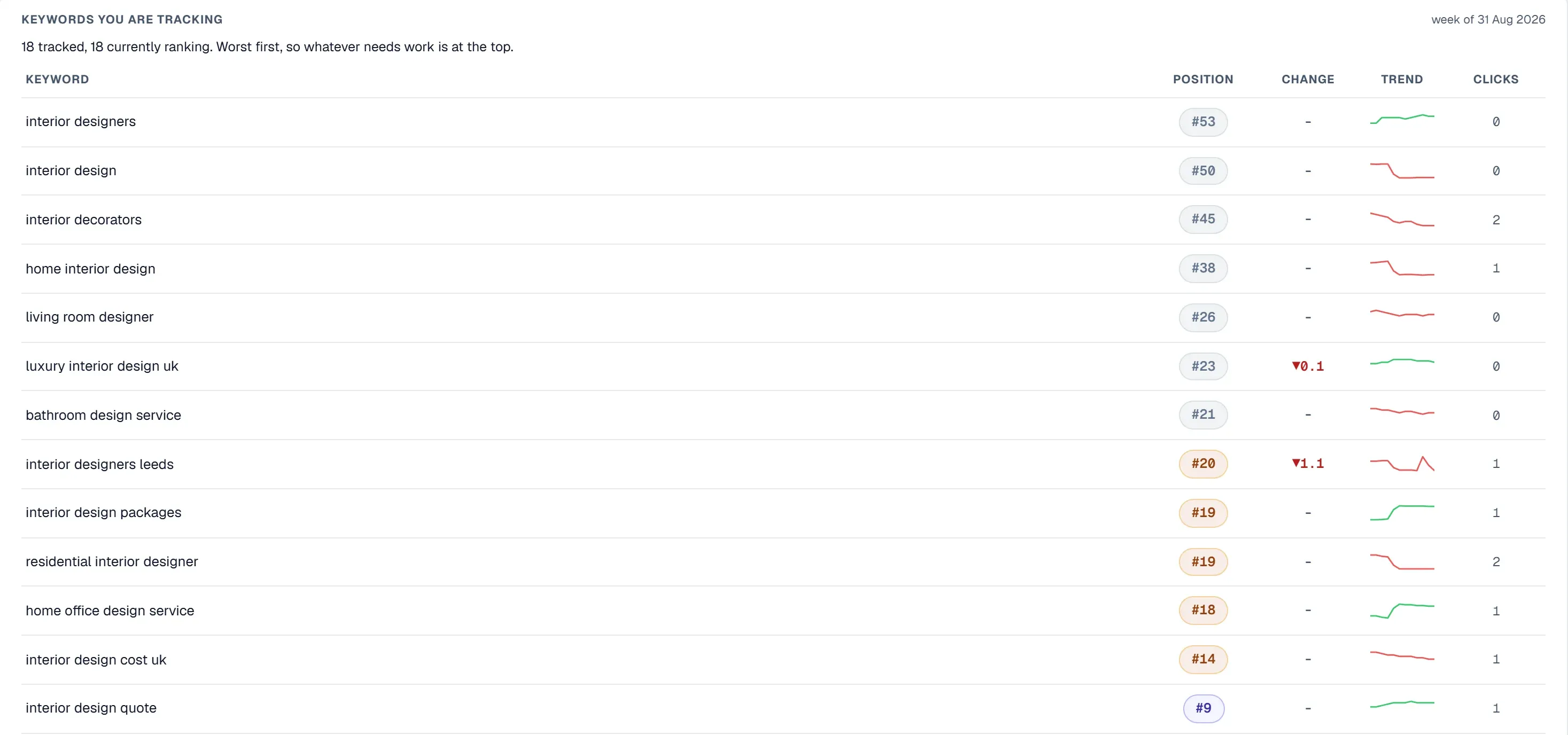
Compared to more basic tools, UtilitySEO offers a more comprehensive GSC rank tracker. While Otterly might offer basic rank tracking and Peec.ai focuses on specific content aspects, UtilitySEO integrates GSC data for daily positions, best ever flags, and sparklines for visual trend analysis. This provides a richer historical context than GSC alone.
Screaming Frog is a desktop based crawler. Neither provides the same level of integrated GSC rank tracker functionality and historical analysis as UtilitySEO. UtilitySEO's scheduled weekly re crawls and scan history features allow for ongoing monitoring and comparison, ensuring you never lose critical data. This helps you track performance over extended periods, far beyond GSC’s native limitations.
Driving Impactful SEO Decisions with UtilitySEO
The GSC rank tracker, when used strategically with advanced tools, transforms raw data into actionable insights. UtilitySEO's platform goes beyond simply showing numbers. Its GSC integration provides untracked keyword discovery, allowing you to find GSC queries not currently in your tracked set. With one click keyword tracking from GSC data, you can quickly add these new opportunities to your monitoring.
The platform also provides an internal link recommender, suggesting the exact phrase, source page, and target for improved site structure. This proactive approach helps build authority for pages and keywords identified through GSC. The SEO to dos feature turns audit findings into assignable tickets, streamlining your workflow. These features help you move from identification to implementation, ensuring that insights from your GSC rank tracker directly translate into measurable improvements. You can explore the full range of features and their impact on your Workflow.
Domande frequenti
To use the gsc rank tracker for advanced insights, you should integrate its unique average position data with other SEO tools for a comprehensive view of your search performance.
- GSC shows actual user queries and impressions.
- Combine GSC with backlink tools to understand position drops.
- Use GSC data with content audit tools for relevance checks.
The GSC rank tracker's average position metric has limitations, as its data is delayed by 1-3 days, provides an average rather than real-time positions, and only retains data for 16 months.
- Data is not immediate.
- Shows average, not exact, positions.
- Historical data is limited to 16 months.
Yes, the GSC rank tracker is invaluable for identifying keyword cannibalization by showing when two different pages consistently appear for the same keyword with similar average positions.
- Reveals pages competing for the same query.
- Highlights potential internal content conflicts.
- Use average position for detection.
You can interpret fluctuations in gsc rank tracker data by correlating significant changes in average position with potential algorithm updates, content decay, or new competitor activity.
- Look for alignment with algorithm update dates.
- Assess content quality for pages with drops.
- Consider new competitor activity.
Integrating the gsc rank tracker data with other SEO tools provides holistic insights by explaining not just what you rank for and where, but also why those positions change.
- Uncovers patterns not visible in isolation.
- Helps diagnose causes of ranking changes.
- Provides actionable insights for optimization.
Scopri cosa sistemare dopo.
Scansiona il tuo sito per capire meglio da dove iniziare.
Circa 30 secondi. Nessuna carta richiesta.