

SEO
Top 10 Cluster Keywords Tools and Platforms
Cluster keywords are a crucial aspect of search engine optimisation, and various tools and platforms are available to facilitate their analysis and...
UtilitySEO
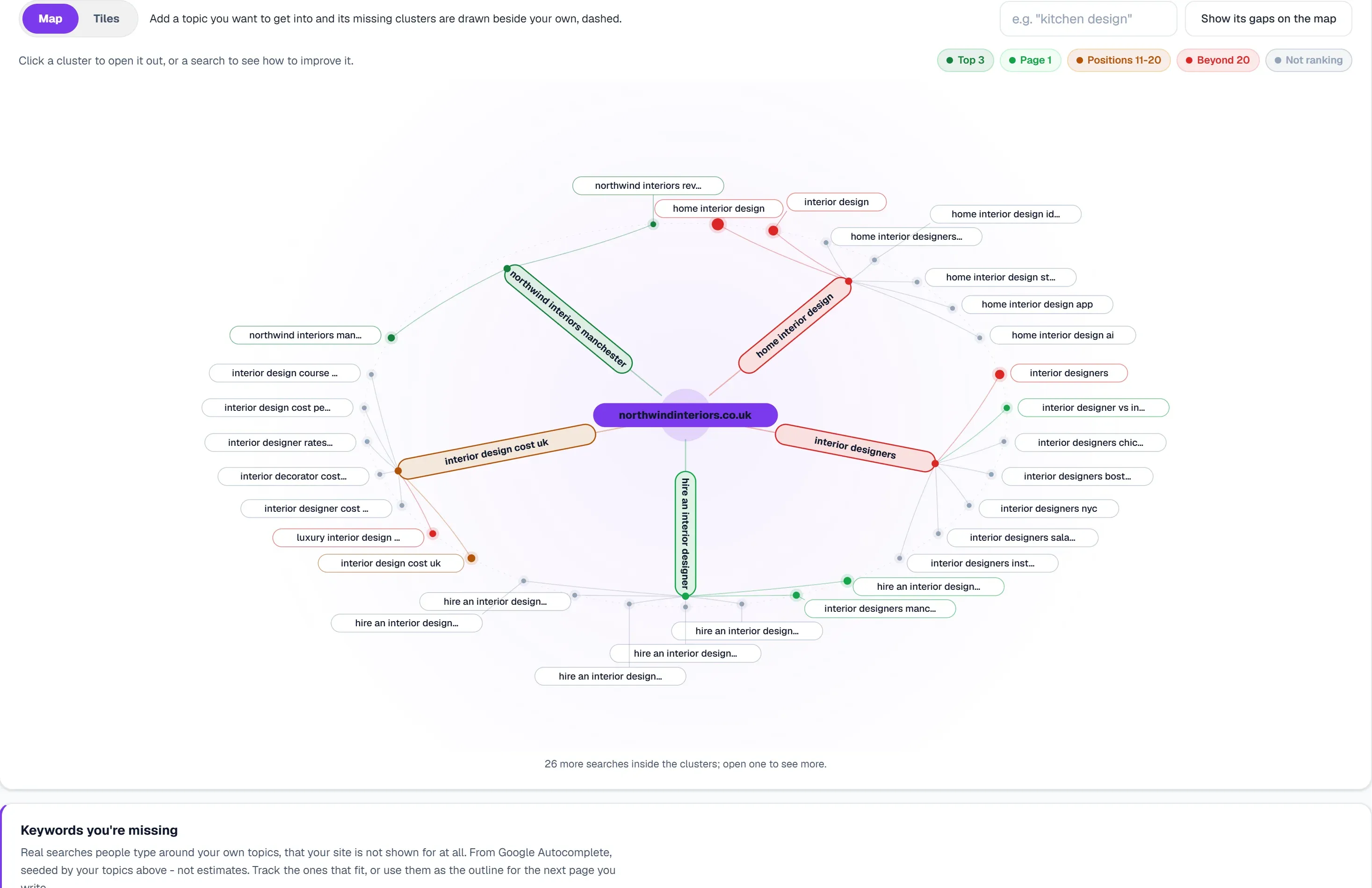
UtilitySEO is a powerful tool that helps businesses boost their online presence by providing in-depth insights into their website's performance. With UtilitySEO, companies can identify areas for improvement and develop targeted strategies to increase their search engine rankings and drive more traffic to their site. By leveraging the features of UtilitySEO, organisations can gain a competitive edge in the digital landscape and achieve their online goals.
* CORE SCANNING: provides a comprehensive analysis of a website's performance, including a deep PageSpeed and SEO audit, to help identify areas for improvement and optimise the site for better search engine rankings
* Keyword tracking: enables businesses to monitor their keyword rankings, impressions, and clicks, with the ability to group keywords for easier analysis and tracking
* SEO results dashboard: offers a clear and concise overview of a website's SEO performance, including a score, issues, fixes, and category filters, as well as lightbulb tips to help improve the site's SEO
* Device and country breakdown: provides a detailed breakdown of keyword performance by device and country, allowing businesses to tailor their SEO strategies to specific regions and devices
* GA4 analytics: provides valuable insights into a website's organic traffic, sessions, and conversions, as well as top pages, to help businesses understand their online performance and make data-driven decisions
* Traffic forecast: uses keyword-based traffic forecasting to help businesses predict their future online performance and develop targeted strategies to drive more traffic to their site
SEMrush
Semrush's knowledge base lists Site Audit limits of 20,000 to 100,000 pages per audit on paid SEO Toolkit plans, whereas UtilitySEO crawls up to 10,000 pages per crawl (depending on plan). Semrush's SEO and Starter plans do not list historical SEO data, which its pricing page includes only from the Pro+ plan upwards.
Ahrefs
Ahrefs Site Audit allows up to 25,000 pages per project on the Lite plan and up to 250,000 pages per project on the Advanced plan. Ahrefs runs its own large backlink index behind Site Explorer, whereas UtilitySEO's backlink analysis is basic and its index is far smaller than Ahrefs'.
Moz
Moz offers a free Moz Community account that gives limited access to MozBar, Keyword Explorer and Link Explorer for backlink research. Moz developed the Domain Authority metric, which it calculates using factors such as the number of linking root domains and the quality of backlinks.
Screaming Frog
Screaming Frog SEO Spider does not analyse server log files itself, as Screaming Frog sells log file analysis as a separate product called the Log File Analyser. Screaming Frog SEO Spider's documentation lists JavaScript rendering, Google Search Console integration, Google Analytics integration and scheduling among the advanced features that require a paid licence.
Google Search Console
Google Search Console provides insights into search query data and user behaviour, facilitating cluster keyword analysis and topic modelling, and enabling marketers to refine their content strategies and improve their website's search engine rankings.
Sitebulb
Sitebulb says its Lite plan is designed for freelancers, startups, website owners and web agencies that do not need to run website audits very often. Sitebulb Cloud supports crawls of up to 10 million URLs per audit, with no project limits and automated recurring crawls, according to Sitebulb.
Mangools
Mangools states that KWFinder supports more than 65,000 locations, so keyword research can be localised to countries, regions and cities. Mangools states that all of its tools are included in every subscription plan, rather than being sold as separate products.
SE Ranking
SE Ranking's Core plan includes 250,000 audit pages per month, and its Growth plan includes 2 million audit pages per month. SE Ranking's backlink checker can compare a backlink profile against up to five competitors and helps users build a list of bad links to disavow.
Serpstat
Serpstat's Rank Tracker includes daily updates, competitor rankings, organic and paid keyword rankings, and desktop and mobile rankings on every plan. Serpstat's Team plan allows up to 25,000 pages per site audit scan with JavaScript rendering, whereas UtilitySEO's full-site crawl covers up to 10,000 pages per crawl (depending on plan).
Ubersuggest
Ubersuggest Enterprise lists site audits of up to 10,000 pages per report, whereas a UtilitySEO full-site crawl covers up to 10,000 pages per crawl (depending on plan). Ubersuggest includes AI search visibility tracking on its paid plans, with prompts checked monthly on Individual, biweekly on Business and weekly on Enterprise.
Rank Math
Rank Math is built for WordPress, and its WordPress.org listing states that it requires WordPress version 6.7 or higher. Rank Math edits titles, descriptions and schema directly inside the WordPress editor, whereas UtilitySEO is a separate web app that syncs and publishes to WordPress through an integration.
Woorank
WooRank Pro plan lists site crawls of up to 2,500 pages, whereas a UtilitySEO full-site crawl covers up to 10,000 pages per crawl (depending on plan). WooRank lets users create unlimited instant website reviews through its Chrome and Firefox browser extensions, subject to its fair use policy.
Seobility
Seobility offers a free Basic plan for one website project and paid Premium, Professional and Agency plans covering three, seven and twenty website projects respectively. Seobility's free Basic plan covers one website project and tracks 10 keywords, according to Seobility's pricing page.
Majestic
Majestic's Lite plan includes the Fresh Index only, with Historic Index access, raw data exports and custom reports reserved for Pro and above. Majestic's Topical Trust Flow shows the relative influence of a page, subdomain or root domain in a given topic or category on a 0 to 100 scale.
Raven Tools
In conclusion, cluster keywords are a crucial aspect of search engine optimisation, and various tools and platforms are available to facilitate their analysis and implementation. By leveraging these tools, marketers can develop targeted content strategies and improve their website's search engine rankings. For more information on cluster keywords and topic modelling, visit Ai Seo Tools: What It Actually Is and How to Do It or Top 10 Keyword Clustering Tools and Platforms
Keyword clustering: what a cluster actually is
A keyword cluster is a group of search terms that Google treats as the same question. Not terms that look similar, terms that return substantially the same results.
That distinction is the whole discipline. "seo audit tool" and "website audit software" look like different keywords and share most of their first page, so they are one cluster and want one page. "seo audit" and "seo audit checklist" look almost identical and return different result types, one commercial and one instructional, so they are two clusters and want two pages.
How SEO keyword clustering is actually done
The reliable method is SERP overlap. Search each term, record the top ten URLs, and group terms that share enough of them. Three or more shared results out of ten is the common threshold, and unlike grouping by wording it is measuring Google's own judgement rather than your intuition about language.
This is also why clustering tools disagree with each other. Some cluster on semantic similarity of the words, which is cheap and confidently wrong at the edges. Some cluster on SERP overlap, which costs more because it requires fetching results for every term.
Why it is worth the trouble
Two things, both of which cost real traffic when skipped:
It prevents cannibalisation. Writing separate pages for terms in one cluster puts your own pages in competition and splits the signal between them. Most cannibalisation starts as a keyword list that was never grouped.
It tells you how many pages you actually need. Six hundred keywords is not six hundred pages. Clustered properly it is usually a few dozen, which is a plan rather than a backlog.
Preguntas frecuentes
Cluster keywords are groups of semantically related search terms that share a common user intent, helping search engines understand your content's depth.
- They involve grouping similar phrases around a main topic.
- This strategy enhances content relevance for users and search engines.
- It improves a website's overall topical authority.
- Tools like SEMrush can help identify these groups.
Understanding cluster keywords is crucial for SEO because they help organise content around topics, improving search engine visibility and user experience.
- They allow for comprehensive content covering a subject thoroughly.
- This approach signals topical authority to search engines.
- It can lead to higher rankings for a wider range of queries.
- Grouping related terms drives more organic traffic.
To find cluster keywords, you can use specialised SEO tools that analyse search queries and group them by semantic relevance and user intent.
- Start with a broad seed keyword and explore related terms.
- Utilise tools like SEMrush, Ahrefs, or Moz for suggestions.
- Look at competitor content and what they rank for.
- Google Search Console offers insights into existing query data.
Several dedicated SEO platforms and tools assist in identifying and managing cluster keywords, streamlining the process of topical content development.
- UtilitySEO offers keyword tracking with grouping features.
- SEMrush and Ahrefs provide advanced clustering methodologies.
- Moz and Screaming Frog help with research and technical audits.
- Google Search Console gives insights into user query data.
Yes, SEMrush implements robust keyword clustering methodologies to facilitate granular topic modeling and thematic categorisation, aiding content strategy development.
- It groups related keywords based on search intent.
- This helps in devising targeted content strategies effectively.
- It enables nuanced long-tail keyword research.
- Optimises online presence through thematic categorisation.
Sabe qué arreglar a continuación.
Analiza tu sitio y ten más claro por dónde empezar.
Unos 30 segundos. Sin tarjeta.