

SEO
Optimizing Content with Topic Clusters: A Comprehensive Guide to Tools and Software
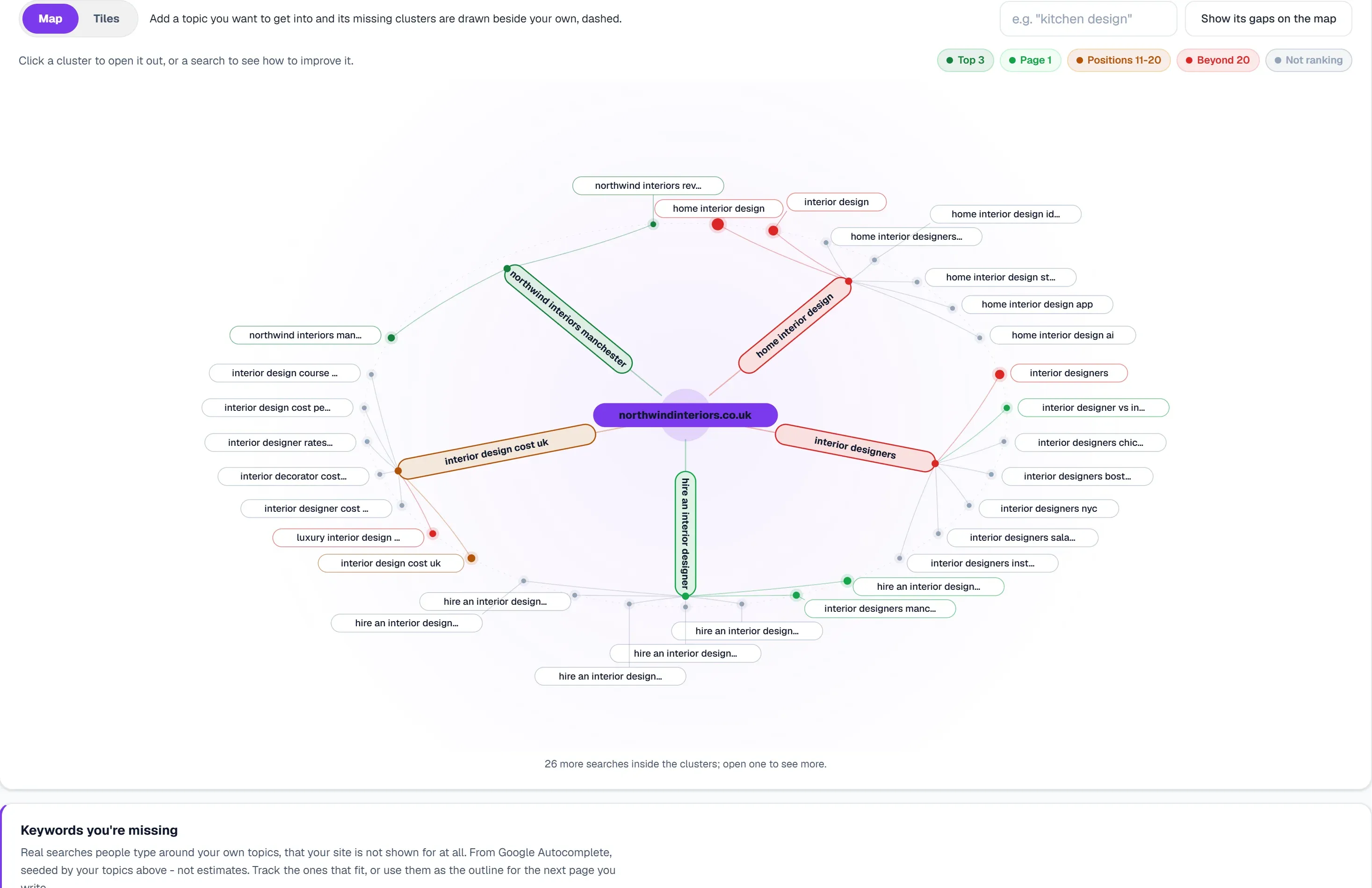
Topic clusters and pillar pages are key components of a successful content marketing strategy, learn how to develop and optimise them for improved search...
Topic clusters are a crucial aspect of modern search engine optimisation. They enable website owners to create comprehensive and structured content that resonates with users. By adopting this approach, businesses can establish authority and expertise in their niche, driving increased online visibility and engagement. This blog explores the benefits and best practices of topic clusters in depth.
UtilitySEO
UtilitySEO offers a powerful set of tools to help you boost your online presence and drive more traffic to your website. By leveraging UtilitySEO, you can gain a deeper understanding of your website's performance and identify areas for improvement, ultimately leading to increased conversions and revenue. With its comprehensive suite of features, UtilitySEO is the perfect solution for businesses looking to take their digital marketing to the next level.
* Single URL scan: provides a deep PageSpeed and SEO audit, using a dual-pass averaging system to give you a comprehensive understanding of your webpage's performance.
* Full site scan: crawls up to a large number of pages via sitemap and internal links, running server-side to give you a thorough analysis of your website's structure and content.
* SEO results dashboard: gives you a clear overview of your website's SEO performance, including a score, issues, fixes, and category filters, as well as lightbulb tips to help you improve your ranking.
* Keyword tracking: uses GSC-powered rankings, impressions, and clicks, with grouping capabilities to help you track your target keywords and understand how they are performing.
* GA4 analytics: provides valuable insights into your website's organic traffic, sessions, conversions, and top pages, helping you to refine your marketing strategy and improve your website's performance.
SEMrush
Semrush's entry SEO plan includes 500 keywords tracked daily across five monitored websites, rising to 5,000 daily tracked keywords on its Advanced plan. Semrush's knowledge base lists Site Audit limits of 20,000 to 100,000 pages per audit on paid SEO Toolkit plans, whereas UtilitySEO crawls up to 10,000 pages per crawl (depending on plan). Semrush includes keyword cannibalisation analysis, historical SEO data and multi-location or multi-device tracking from its Pro+ plan upwards.
Ahrefs
Ahrefs Free gives website owners free, limited access to Site Explorer and Site Audit data for their own websites. Ahrefs describes its Standard plan as aimed at freelance SEOs and marketing consultants, and its Advanced plan as aimed at lean in-house marketing teams. Ahrefs runs its own large backlink index behind Site Explorer, whereas UtilitySEO's backlink analysis is basic and its index is far smaller than Ahrefs'.
Moz
Moz offers a free Moz Community account that gives limited access to MozBar, Keyword Explorer and Link Explorer for backlink research. Moz's help documentation says Moz Pro campaign rankings update once per week, on a day set by when the campaign was first created. Moz's help documentation says on-demand site recrawls require a Medium Moz Pro plan or above, with scheduled crawls otherwise running once a week.
Screaming Frog
Screaming Frog SEO Spider connects to the Google Analytics 4, Google Search Console and PageSpeed Insights APIs to pull their data into a crawl. Screaming Frog SEO Spider does not analyse server log files itself, as Screaming Frog sells log file analysis as a separate product called the Log File Analyser. Screaming Frog SEO Spider can pull external link metrics from the Majestic, Ahrefs and Moz APIs into a crawl for content audits or link profiling.
Google Search Console
Google Search Console provides insights into website search performance and user behaviour, which can inform the development of topic clusters and content hubs, and facilitate the identification of areas for content improvement and optimisation, through its search analytics and impression data.
Sitebulb
Sitebulb's Lite plan is capped at 10,000 URLs per audit for a single user, and audit comparisons and scheduled audits are listed as Pro features. Sitebulb Cloud supports crawls of up to 10 million URLs per audit, with no project limits and automated recurring crawls, according to Sitebulb. Sitebulb Pro adds audit comparisons, scheduled audits, advanced configuration and customised PDF reports on top of the features in the Sitebulb Lite plan.
Mangools
Mangools includes AI Search Watcher on its paid plans, with the pricing page listing 500 monitored prompts on each of the Basic, Premium and Agency plans. Mangools free plan is limited in KWFinder to 5 lookups per 24 hours, with 15 related and 5 competitor keywords per lookup. Mangools states that all of its tools are included in every subscription plan, rather than being sold as separate products.
SE Ranking
SE Ranking's Website Audit supports client-side JavaScript rendering and can be scheduled to run automatically on a weekly or monthly basis. SE Ranking positions its Growth plan for automation and collaboration across multi-client SEO and GEO work, with 30 projects and three manager seats. SE Ranking's Core plan audits up to 250,000 pages per project, whereas UtilitySEO's full-site crawl covers up to 10,000 pages per crawl (depending on plan).
Serpstat
Serpstat's Team plan and above include API access, ChatGPT and Claude integration through MCP, batch analysis and scheduled reports. Serpstat's Agency plan allows 1,500,000 pages to audit per month with no maximum on pages per scan, and includes white-label reports. Serpstat's Rank Tracker includes daily updates, competitor rankings, organic and paid keyword rankings, and desktop and mobile rankings on every plan.
Ubersuggest
Ubersuggest lets users sign up for a free account with limited features before choosing a paid plan. Ubersuggest Enterprise lists site audits of up to 10,000 pages per report, whereas a UtilitySEO full-site crawl covers up to 10,000 pages per crawl (depending on plan). Ubersuggest positions its Individual plan for solopreneurs growing one website, its Business plan for small and medium businesses, and Enterprise for large businesses and agencies.
Rank Math
Rank Math edits titles, descriptions and schema directly inside the WordPress editor, whereas UtilitySEO is a separate web app that syncs and publishes to WordPress through an integration. Rank Math describes its PRO plan as for bloggers, individuals and solopreneurs, and its Business plan as for freelancers, business and agency owners. Rank Math's WordPress.org listing includes Google Search Console and Google Analytics integrations, plus more than 30 one-click SEO tests with content recommendations.
Woorank
WooRank Pro and Premium plans integrate with Google Analytics, Google Search Console and Facebook, and include automatic uptime notifications if a site goes down. WooRank describes its Premium plan as for professionals, teams and agencies working on multiple websites, and its Enterprise plan as for agencies and enterprises. WooRank Pro plan covers one website and 50 tracked keywords, and lets users compare a site against 3 competitors.
Seobility
Seobility offers a free Basic plan for one website project and paid Premium, Professional and Agency plans covering three, seven and twenty website projects respectively. Seobility's free Basic plan covers one website project and tracks 10 keywords, according to Seobility's pricing page. Seobility's website audit automatically crawls a site to detect technical SEO issues such as broken links, duplicate content and slow-loading pages.
Majestic
Majestic's Lite and Pro plans each include a single user, and full API access is available only on its API plan. Majestic says its Fresh Index is updated frequently throughout the day, and its links are more likely to be live than those in the Historic Index. Majestic's Topical Trust Flow shows the relative influence of a page, subdomain or root domain in a given topic or category on a 0 to 100 scale.
Raven Tools
Raven Tools pitches its plans at agencies and in-house marketing teams, with plans ranging from 2 to 320 domains or campaigns and from 2 to 40 users. Raven Tools draws its backlink data from Majestic's index, whereas UtilitySEO's backlink analysis is basic and uses an index far smaller than Majestic's. Raven Tools accounts start with a free trial lasting 7 days, according to the FAQ on its pricing page.
Further reading
Preguntas frecuentes
Topic clusters are a content marketing strategy.
- Improve search engine rankings
- Increase online visibility
- Establish authority
Create topic clusters by researching keywords.
- Identify relevant search intent
- Develop pillar page content
- Optimize internal linking
Tools like SEMrush and Ahrefs use topic clusters.
- Analyze content gaps
- Identify opportunities
- Inform content hub creation
Yes, topic clusters improve SEO results.
- Increase website authority
- Enhance search engine rankings
- Drive more traffic
Topic cluster research informs content strategy.
- Identify target search intent
- Develop content roadmaps
- Optimize pillar pages
Using topic clusters is worth it for marketing.
- Improve online visibility
- Increase conversions
- Establish brand authority
Sabe qué arreglar a continuación.
Analiza tu sitio y ten más claro por dónde empezar.
Unos 30 segundos. Sin tarjeta.